1.1 — Welcome — while you get set up
WelcomeSay this
Housekeeping while people arrive.
Materials to have ready:
• Participation & Reflection Guide (printed or on screen)
My notes
Presenter study handout
3 contact hours · 0.3 AOTA CEUs · All 6 modules · 115 slides
Presenter-side material. Each block shows the slide as the audience sees it, the talk track, and space for your own notes. Model answers appear here — do not hand this version to learners.
Say this
Housekeeping while people arrive.
Materials to have ready:
• Participation & Reflection Guide (printed or on screen)
My notes
Say this
Read the filed learning objectives verbatim — this is the AOTA-approved wording.
Objectives:
• Explain the developmental and anatomical basis of the visual system and articulate the occupational therapy practitioner's role in supporting visual function within the OT scope of practice.
My notes
Say this
Explain how the session runs.
Schedule:
• Six modules, 3.0 contact hours total
My notes
Say this
Transition: "Module 1."
My notes
Say this
Open here. "Why Visual Performance Matters." Vision is already on your caseload. The only question is whether it is named, measured, and treated.
Say why this section matters for their caseload, then advance.
My notes
Say this
Ask the poll: "When you see a visual concern in a student, how do you usually respond first?"
Options:
• I refer to the eye doctor and wait for results
My notes
Say this
Frame the slide: "You are already treating vision."
Walk each point, one sentence each:
• Handwriting, reading endurance, board copying, dressing, feeding, mobility, play, driving, work simulation — every one routes through vision.
My notes
Say this
Frame the slide: "Understand → assess → intervene."
Walk each point, one sentence each:
• Understanding is not optional: vision is a client factor and a performance skill inside every occupational performance evaluation you already do.
My notes
Say this
Contrast the two columns: Schools and clinics versus Universities and programs.
Schools and clinics:
• Schools: visual performance sits under reading, writing, accommodations, and state testing.
My notes
Say this
Frame the slide: "Vision is the dominant channel for learning."
Walk each point, one sentence each:
• Classroom occupations are visually loaded: reading, copying, board work, worksheets, and navigation all route through vision (framing statement, Visual Minds Learning — not a prevalence figure).
My notes
Say this
Frame the slide: "Why schools are required to respond."
Walk each point, one sentence each:
• IDEA covers school-age children whose qualifying condition adversely affects educational performance.
My notes
Say this
Contrast the two columns: Oculomotor and acuity versus Related development.
Oculomotor and acuity:
• Fixation and basic eye movements emerge by 2–3 months
My notes
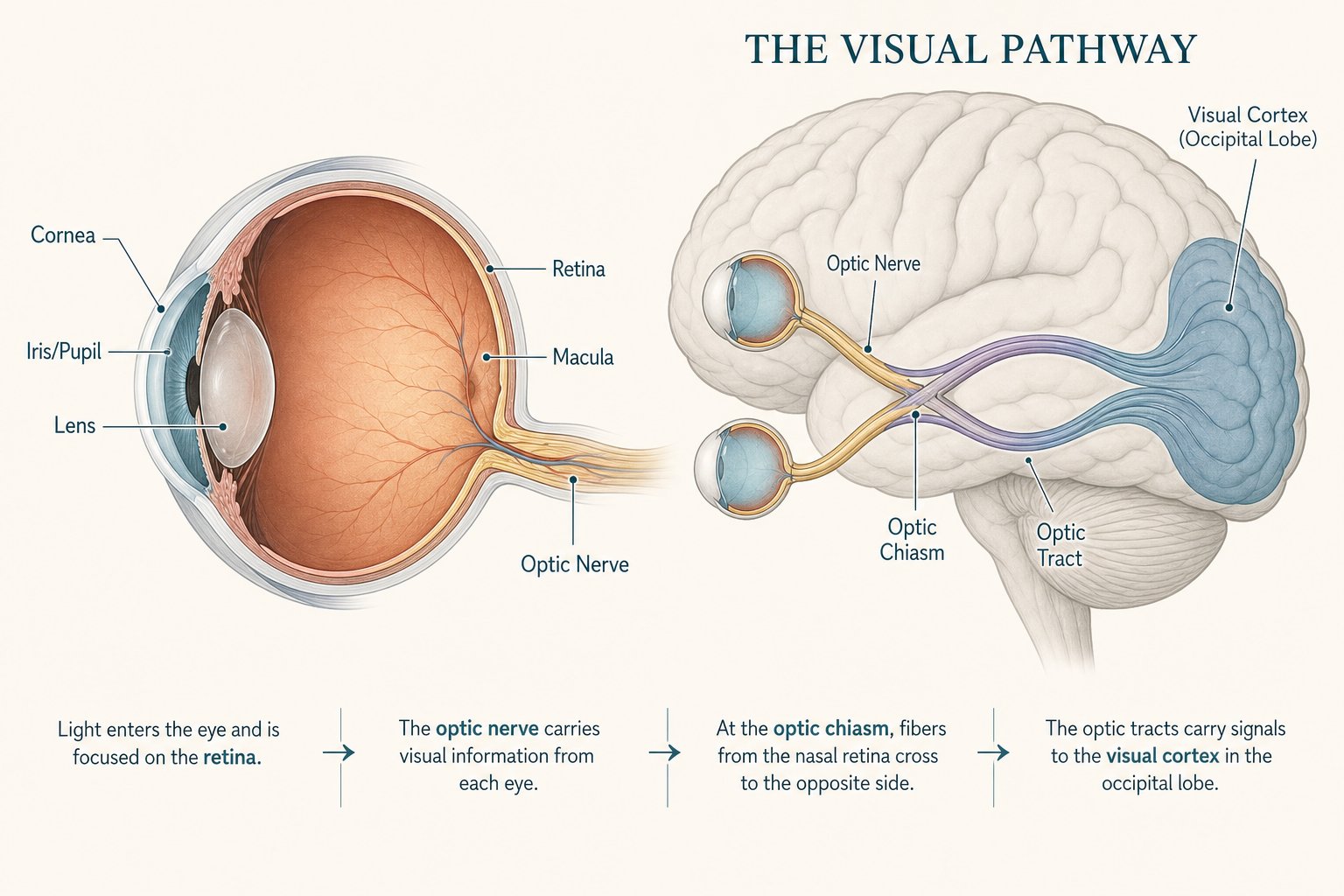
Say this
Talk over the visual: "Visual anatomy — the structures behind the function."
Say the caption in your own words: Cornea, lens, retina, optic nerve, chiasm, tracts, and visual cortex — the hardware that visual performance depends on.
My notes
Say this
Frame the slide: "Where OT sits relative to the eye care team."
Walk each point, one sentence each:
• Optometry and ophthalmology own refraction, ocular health, and diagnosis.
My notes
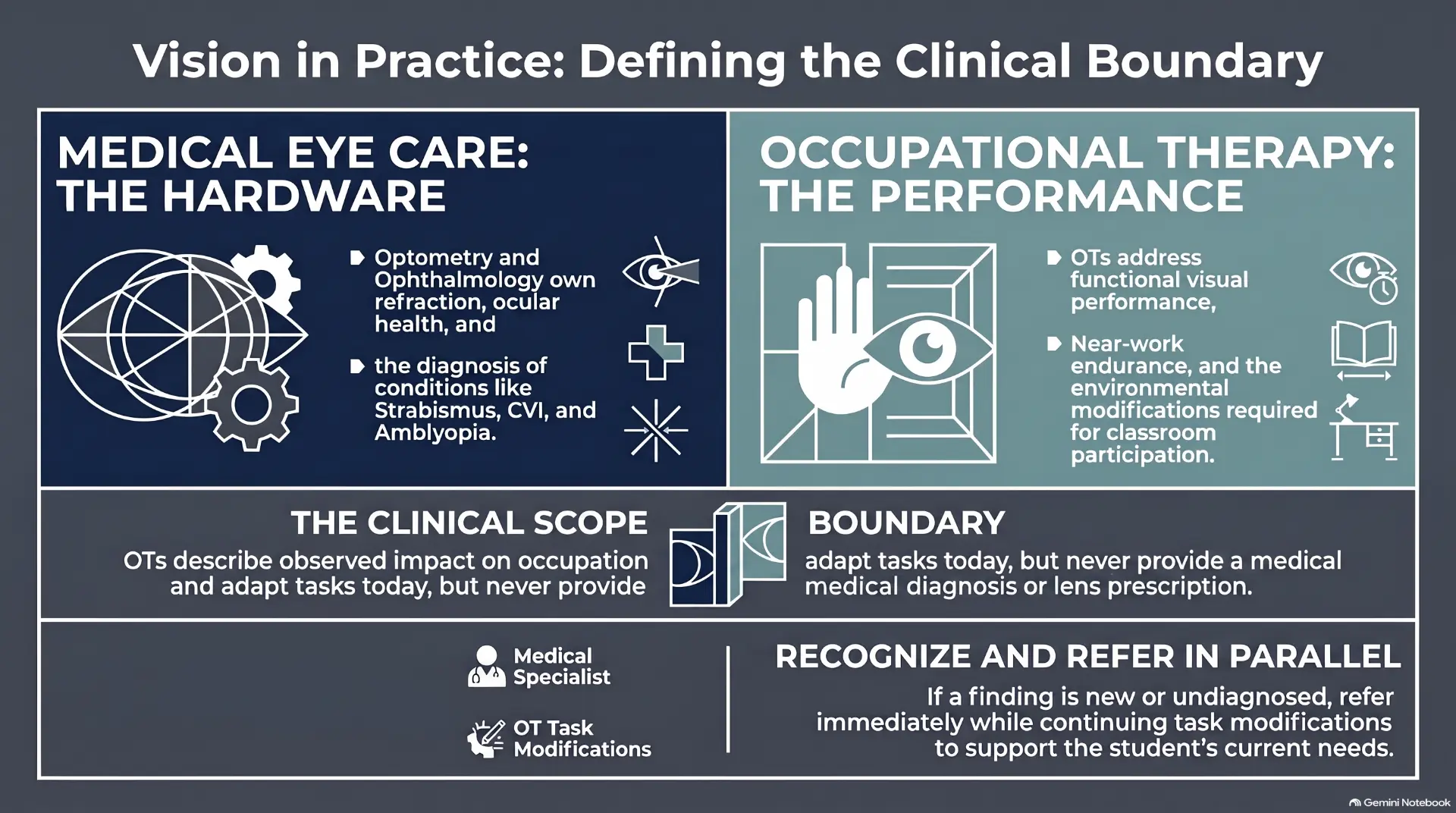
Say this
Talk over the visual: "Two lanes, one student."
Say the caption in your own words: Medical eye care owns diagnosis and the optical correction; OT owns performance inside real occupations. The referral and the task modification run in parallel, on the same day.
My notes
Say this
Set up the clip in one sentence, play it, then debrief with "what did you notice?"
My notes
Say this
Read the scenario aloud, slowly:
A kindergarten teacher reports that a student "just isn't paying attention" during calendar time and often bumps into classmates during transitions. The student passed a school vision screening six months ago.
Then put these questions to the room:
My notes
Say this
Describe what belongs here: The referral question, the occupation it interrupts, and who else is already involved..
My notes
Say this
Land the "so what": A distance acuity screening answers one question at one distance. Nearly every school task the student is failing happens at 40 cm, under time pressure, with both eyes working together.
Explain the mechanism plainly: Screenings are built to catch reduced acuity, not efficiency, endurance, or integration.
Then give them the moves — say each one as something they can do Monday:
My notes
Say this
Two-minute case. Read it aloud:
A teacher forwards a screening result of 20/20 in each eye and says "so it is not her vision."
Put the question to them: "What is your one-sentence reply, and what do you do next?" Give 60 seconds, no talking.
My notes
Say this
Reflection prompt: "Think about a referral you received that mentioned a visual concern. What did you own as OT, and what did you defer to eye care?"
Cues:
• Name one observation you could write in occupational terms.
My notes
Say this
Knowledge check: "A first-grade student holds books at 10 cm and squints. The school vision screen was passed. Which statement is most appropriate for your OT note?"
Options:
• Student has convergence insufficiency and needs vision therapy.
My notes
Say this
Transition: "Module 2."
My notes
Say this
Open here. "The Visual Pathways." Ventral "what" vs. dorsal "where," and their classroom signatures.
Say why this section matters for their caseload, then advance.
My notes
Say this
Ask the poll: "Which visual performance patterns show up most in your current caseload?"
Options:
• Slow recognition of letters, words, or symbols
My notes
Say this
Talk over the visual: "Two streams, one retina."
Say the caption in your own words: Retina → optic nerve → chiasm → LGN → V1, then divergence: dorsal superiorly to parietal cortex, ventral inferiorly to temporal cortex (Visual Minds Learning clinical education).
My notes
Say this
Talk over the visual: "Parvocellular and magnocellular tracts."
Say the caption in your own words: Parvocellular cells carry fine detail and color into the ventral stream; magnocellular cells carry motion and low-contrast information into the dorsal stream.
My notes
Say this
Talk over the visual: "Vision's Two Highways."
Say the caption in your own words: The magnocellular highway (motion, contrast, spatial awareness, action) and the parvocellular highway (detail, color, form, recognition) merge at the LGN before diverging into the dorsal and ventral streams.
My notes
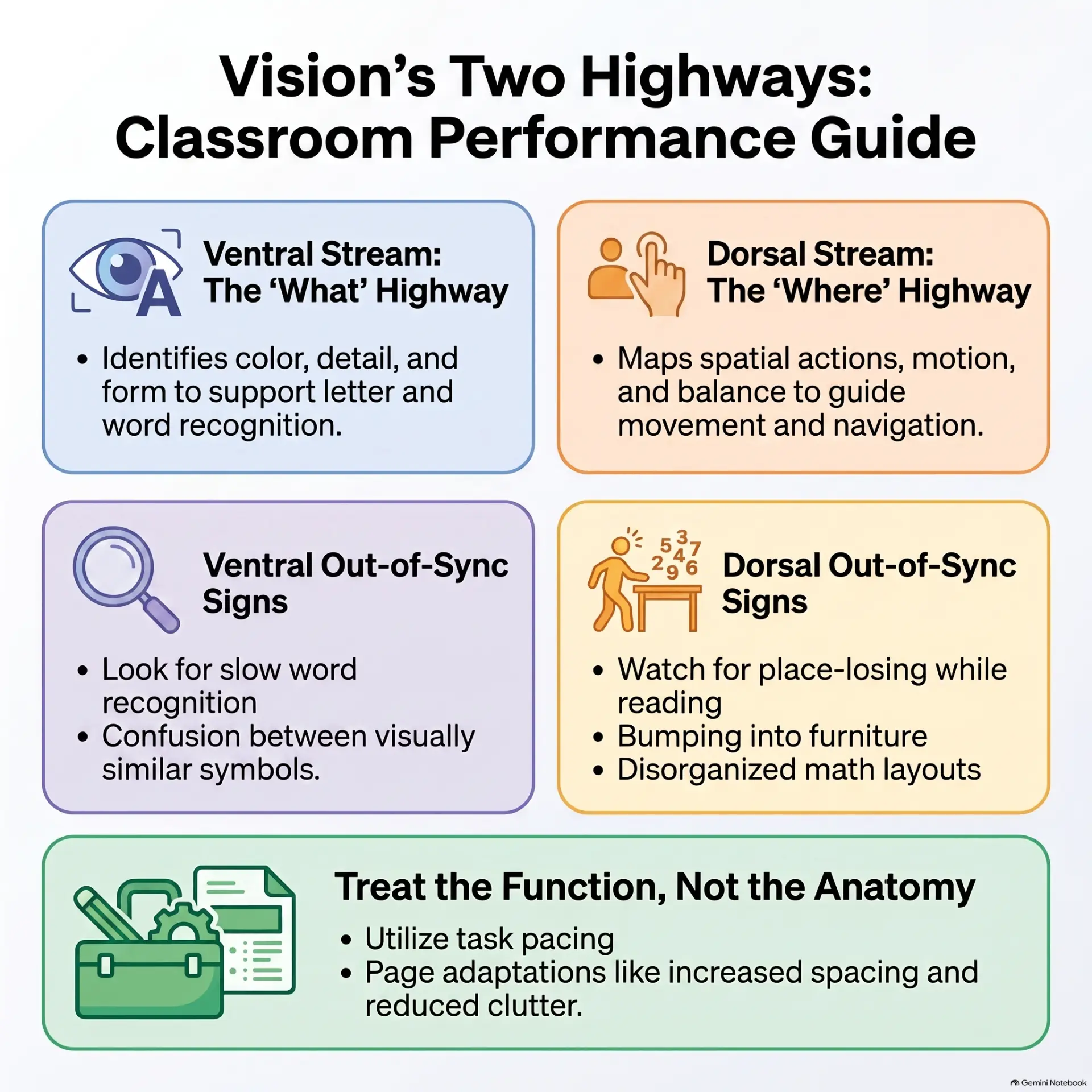
Say this
Talk over the visual: "Vision's two highways in the school day."
Say the caption in your own words: Ventral "what" signs versus dorsal "where" signs, side by side with the classroom behaviors each one produces.
My notes
Say this
Contrast the two columns: Ventral stream — "What?" versus Dorsal stream — "Where?".
Ventral stream — "What?":
• Parvocellular tract
My notes
Say this
Frame the slide: "What a ventral-stream (parvocellular) signature looks like in class."
Walk each point, one sentence each:
• Slow, effortful recognition of letters, sight words, or numerals
My notes
Say this
Frame the slide: "What a dorsal-stream (magnocellular) signature looks like in class."
Walk each point, one sentence each:
• Bumping into furniture, misjudging distances, poor spatial awareness in the room
My notes
Say this
Frame the slide: "We do not treat tracts — we treat the functional components."
Walk each point, one sentence each:
• The magnocellular and parvocellular tracts describe transmission: how visual information travels from retina to cortex. That is anatomy and physiology, and it is outside what OT assesses or changes.
My notes
Say this
Run the five levels bottom-up.
Spend your time on Level 3 — that is the point of this slide.
My notes
Say this
Set up the clip in one sentence, play it, then debrief with "what did you notice?"
My notes
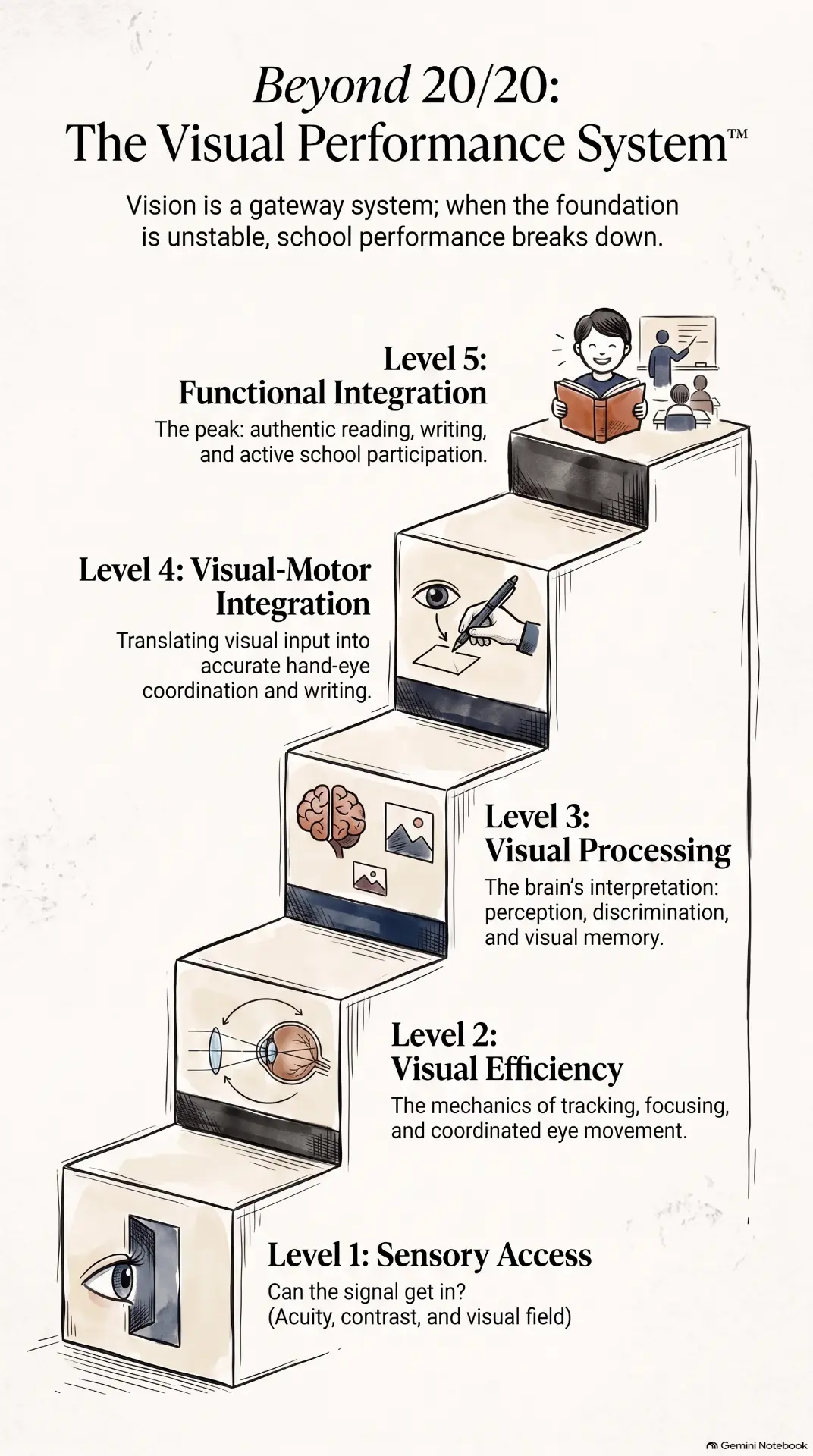
Say this
Talk over the visual: "Beyond 20/20 — the Visual Performance System™."
Say the caption in your own words: Level 1 Visual Access → Level 2 Visual Efficiency → Level 3 Visual Processing → Level 4 Visual-Motor Integration → Level 5 Functional Integration.
My notes
Say this
Read the scenario aloud, slowly:
A 3rd-grade student reads individual words accurately in isolation but cannot find her place after looking up from the page, and she frequently loses items placed directly in front of her on a busy desk.
Then put these questions to the room:
My notes
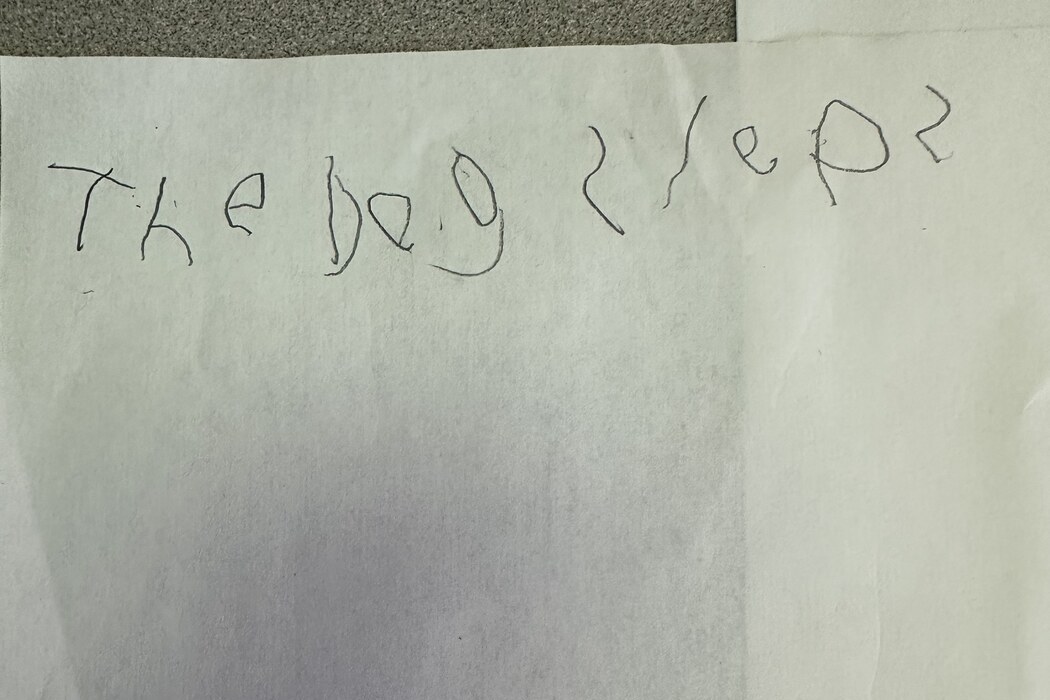
The student has to generate placement, size, and direction with no external structure.
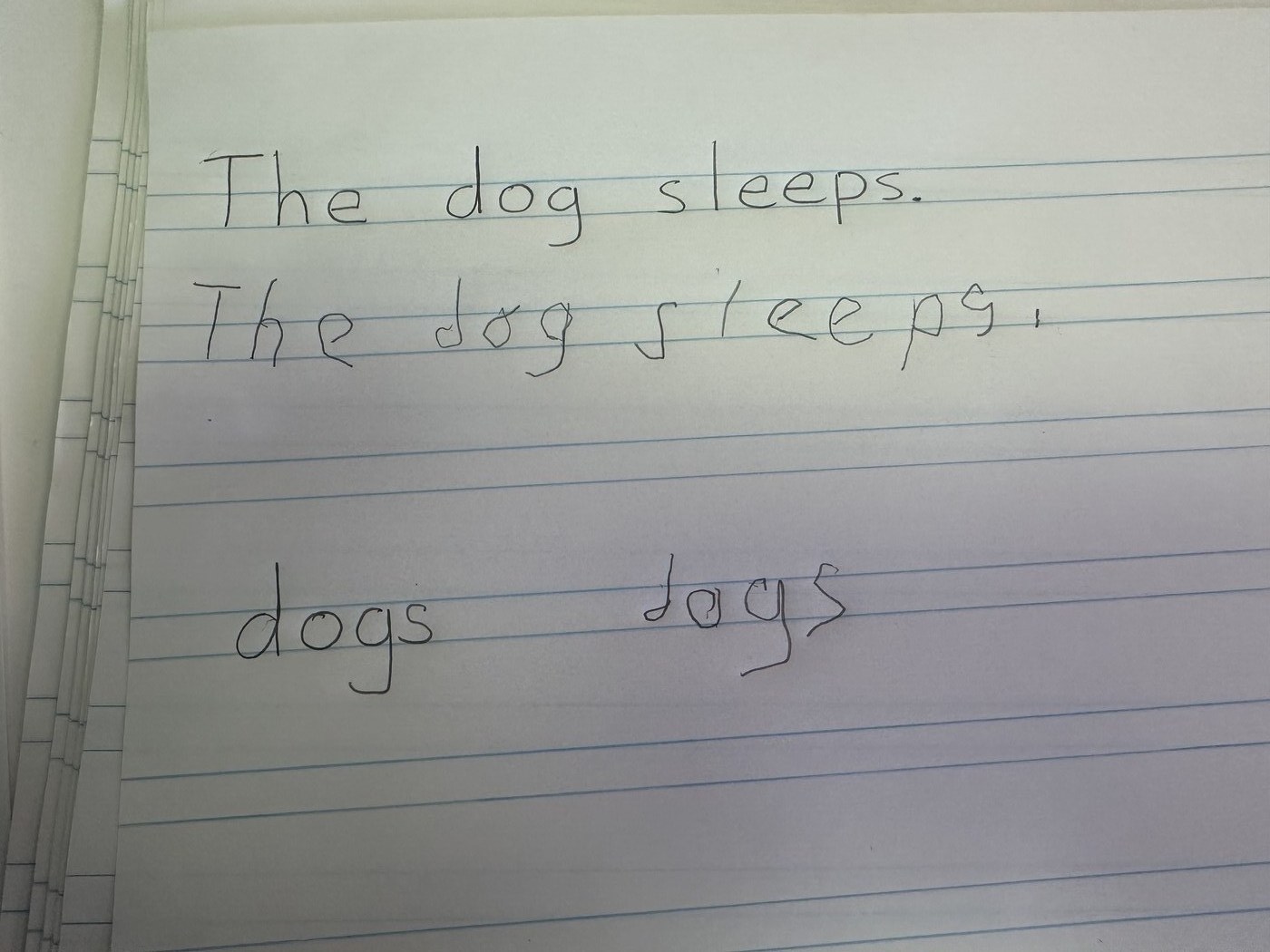
Same sentence, same student, with baseline and line-to-line reference restored.
When performance changes because the environment supplied the spatial reference, you are looking at a spatial ("where") demand, not a word-knowledge ("what") problem.
Say this
Set up the contrast: "What a spatial ("where") breakdown looks like on the page."
Point at the before panel first. The student has to generate placement, size, and direction with no external structure.
Then the after panel. Same sentence, same student, with baseline and line-to-line reference restored.
My notes
Say this
Land the "so what": You will almost never be handed a vision complaint. You will be handed avoidance, sloppiness, slowness, or "not trying."
Explain the mechanism plainly: Children rarely report a visual world they have always had. They report what it costs them, in behavior.
Then give them the moves — say each one as something they can do Monday:
My notes
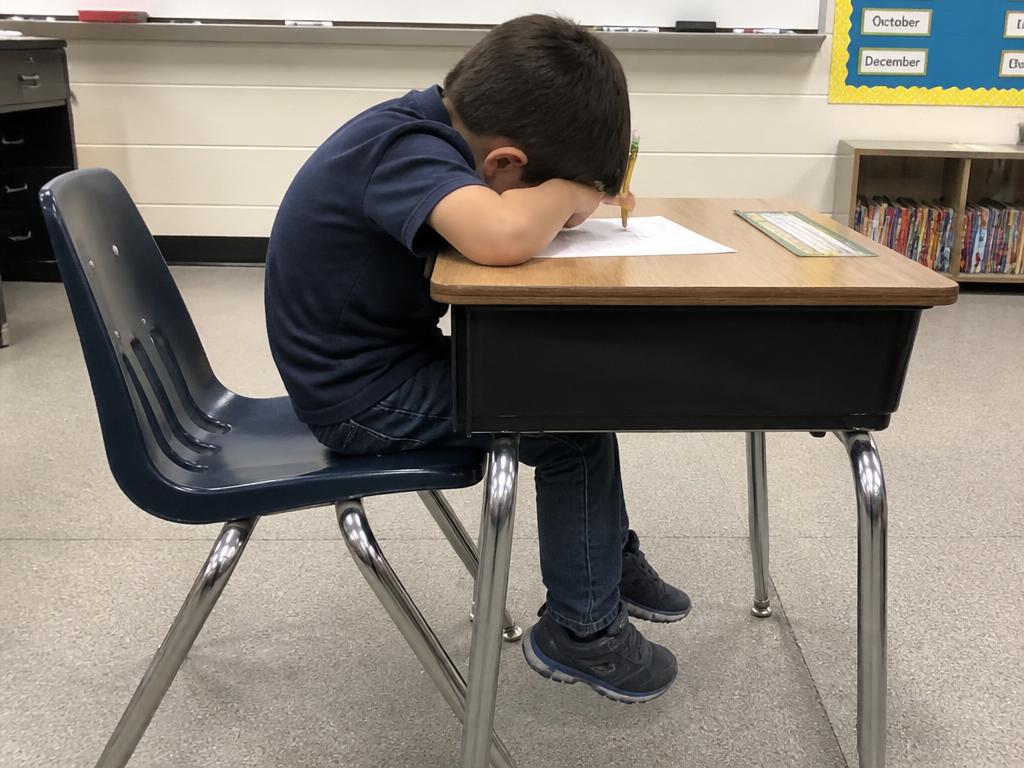
Feet unsupported, trunk collapsed, page about 15 cm from the eyes.

Feet supported, hips back, page raised toward a slant, working distance near Harmon distance.
Fix posture and distance before you score anything. Otherwise you are documenting the setup, not the student.
Say this
Set up the contrast: "Postural setup changes what you are measuring."
Point at the before panel first. Feet unsupported, trunk collapsed, page about 15 cm from the eyes.
Then the after panel. Feet supported, hips back, page raised toward a slant, working distance near Harmon distance.
My notes
Say this
Two-minute case. Read it aloud:
A Grade 3 student completes math facts on a whiteboard quickly, but produces almost nothing on the same problems given as a dense worksheet.
Put the question to them: "What does that difference tell you, and what do you trial first?" Give 60 seconds, no talking.
My notes
Say this
Reflection prompt: "Choose one student. Describe one behavior that looks like a "what" problem and one that looks like a "where" problem."
Cues:
• Use only the language of classroom performance, not stream labels.
My notes
Say this
Knowledge check: "A student reads words accurately but cannot copy from a spatial diagram. Which description fits best?"
Options:
• Ventral stream problem — difficulty identifying details
My notes
Say this
Transition: "Module 3."
My notes
Say this
Open here. "Underlying Conditions vs. Functional Limitations." The eye and brain conditions that may sit under what you observe — and the functional problems OT actually treats.
Say why this section matters for their caseload, then advance.
My notes
Say this
Ask the poll: "Which condition are you least confident recognizing functionally?"
Options:
• Cortical Visual Impairment (CVI)
My notes
Say this
Frame the slide: "How to use this module."
Walk each point, one sentence each:
• These are possible underlying diagnoses, not OT findings — diagnosis belongs to ophthalmology, optometry, and neurology.
My notes
Say this
Contrast the two columns: What it is versus Functional limitations OT treats.
What it is:
• Brain-based, not ocular — the eye exam is often normal
My notes
Say this
Contrast the two columns: What it is versus Functional limitations OT treats.
What it is:
• Congenital under-development of the optic nerve
My notes
Say this
Contrast the two columns: Strabismus versus Amblyopia.
Strabismus:
• Eyes are not aligned with one another; can be congenital or acquired
My notes
Say this
Frame the slide: "Naming the direction — vocabulary, not diagnosis."
Walk each point, one sentence each:
• Esotropia — eye turns inward.
My notes
Say this
Contrast the two columns: Ocular albinism versus Nystagmus.
Ocular albinism:
• Hereditary condition; excess light enters through an unpigmented iris
My notes
Say this
Contrast the two columns: Retinopathy of Prematurity & Retinitis Pigmentosa versus Congenital cataracts.
Retinopathy of Prematurity & Retinitis Pigmentosa:
• ROP: abnormal blood vessel growth unique to preterm infants; incidence approaches 100% in the smallest, lowest-birth-weight infants
My notes
Say this
Contrast the two columns: What the diagnosis tells you versus What you write and treat.
What the diagnosis tells you:
• Reduced acuity — detail is limited
My notes
Say this
Read the scenario aloud, slowly:
A 2nd-grade student passed a school acuity screening this year. In therapy, he tilts his head to one side while reading, occasionally reports "things look blurry and double," and squints in bright hallway light.
Then put these questions to the room:
My notes
Say this
Set up the clip in one sentence, play it, then debrief with "what did you notice?"
My notes
Say this
Contrast the two columns: Diagnosed and managed → OT addresses it versus Undiagnosed, unclear, or changing → refer.
Diagnosed and managed → OT addresses it:
• Low acuity: magnification, enlarged print, working distance, seating.
My notes
Say this
Contrast the two columns: Refer promptly versus OT continues in parallel.
Refer promptly:
• New or intermittent eye turn, head tilt, or double vision
My notes
Say this
Land the "so what": Some findings move to the front of the line the day you see them; most do not. Knowing which is which protects the student and your scope.
Explain the mechanism plainly: Pain, sudden change, new diplopia, new head tilt, or an unexplained acuity drop are same-day referrals regardless of caseload.
Then give them the moves — say each one as something they can do Monday:
My notes
Say this
Two-minute case. Read it aloud:
During a Thursday session, a student you have treated for months suddenly holds his head tilted to the right and reports "two of things" when he looks at the board.
Put the question to them: "What is your action today?" Give 60 seconds, no talking.
My notes
Say this
Reflection prompt: "Write a one-sentence referral note for a student you suspect may have a visual condition that needs eye care. Include only what you observed and why it matters."
Offer the sentence starter: "During [activity], [student] was observed... This matters because it affects..."
Think for one minute, write, then take two shares.
My notes
Say this
Knowledge check: "Which finding requires the most urgent referral?"
Options:
• A student who reads slowly with large print
My notes
Say this
Transition: "Module 4."
My notes
Say this
Open here. "Comorbidity Patterns." Autism, ADHD, dyslexia, and dysgraphia — visual performance signs, not causation.
Say why this section matters for their caseload, then advance.
My notes
Say this
Ask the poll: "In your practice, when a student has a diagnosis like ADHD or dyslexia, how often is a visual contribution also checked?"
Options:
• Always
My notes
Say this
Frame the slide: "Association is not causation."
Walk each point, one sentence each:
• These four conditions frequently co-occur with visual performance differences — the visual finding does not cause the diagnosis.
My notes
Say this
Contrast the two columns: What is reported versus Occupational impact.
What is reported:
• Reduced eye contact or difficulty sustaining visual focus
My notes
Say this
Contrast the two columns: What is reported versus Occupational impact.
What is reported:
• Difficulty sustaining focus on visual tasks; easily distracted
My notes
Say this
Contrast the two columns: What is reported versus Reported associations.
What is reported:
• Letter or number reversals; misaligned text or math columns
My notes
Say this
Frame the slide: "Visual performance signs associated with dysgraphia."
Walk each point, one sentence each:
• Illegible handwriting; struggles with letter formation, alignment, and spacing.
My notes
Say this
Frame the slide: "The numbers behind the urgency."
Walk each point, one sentence each:
• 1 in 4 school-age children are estimated to have an undiagnosed vision problem affecting academics (Kleinstein et al., 2003, population-based cohort).
My notes
Say this
Read the scenario aloud, slowly:
A 5th-grade student with an ADHD diagnosis is referred for "poor handwriting and inattention." During your session he loses his place three times in one paragraph and cannot locate his pencil among other items on the desk.
Then put these questions to the room:
My notes
Say this
Set up the clip in one sentence, play it, then debrief with "what did you notice?"
My notes
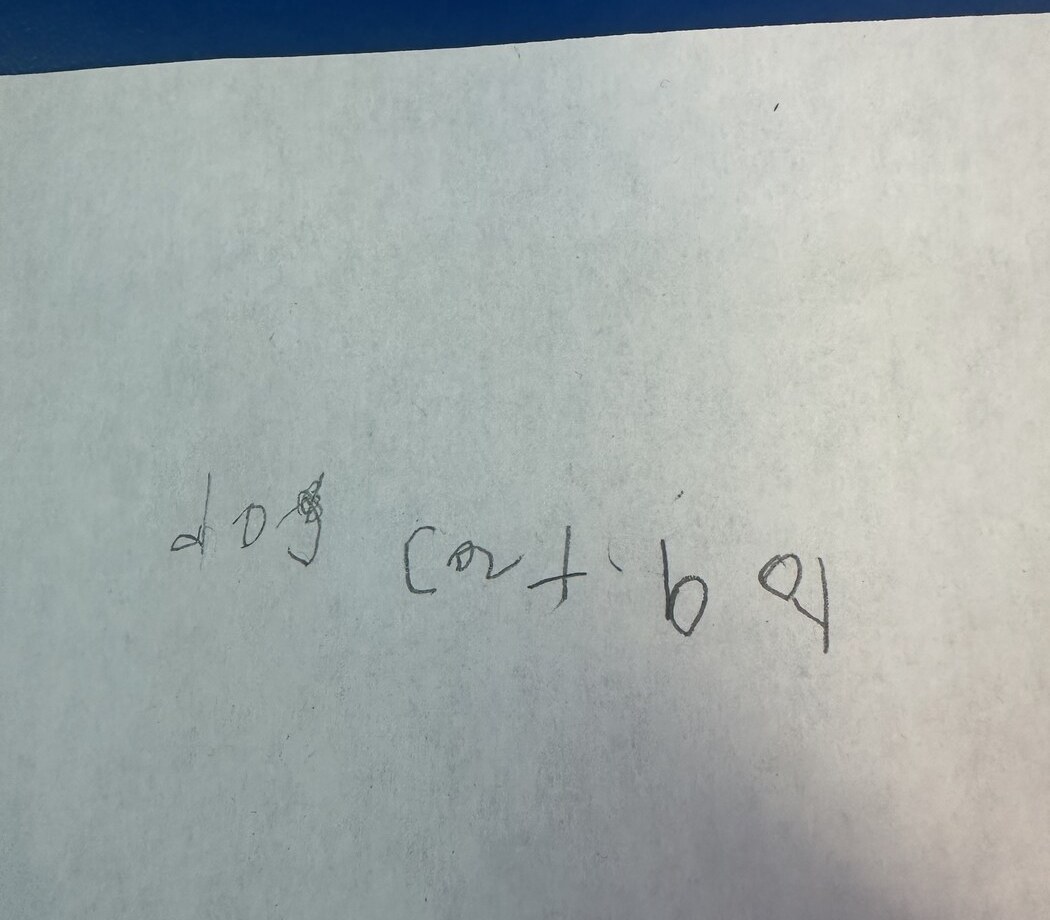
Same student, same words, no external spatial structure.
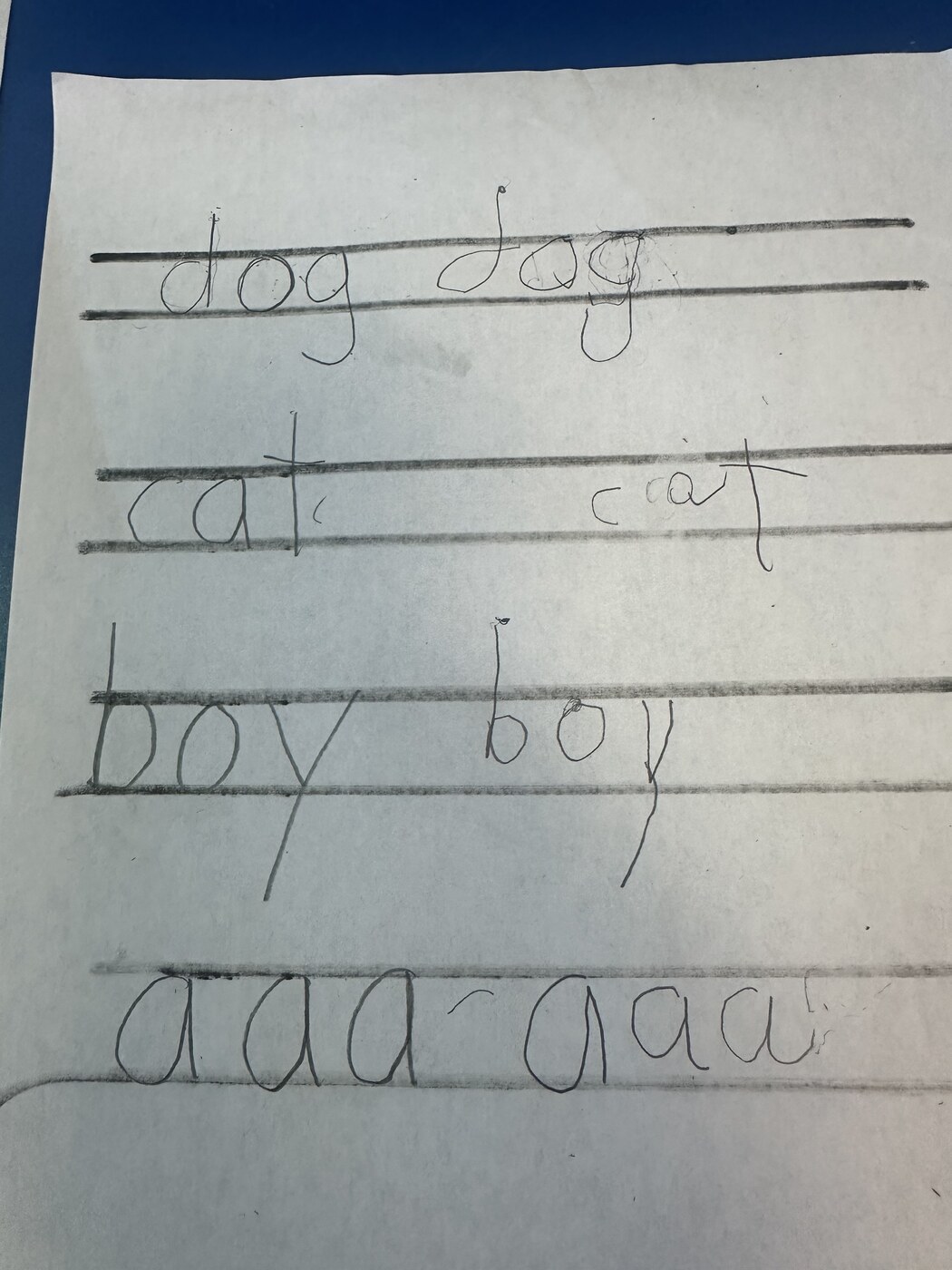
The visual boundary is supplied by the page instead of held in the head.
This is a spacing, alignment, and formation problem — a visual-motor integration signature — not a motivation or handwriting-instruction problem. Document what you observed, modify the page today, and refer if no eye exam is on file.
Say this
Set up the contrast: "A visual-motor signature on the page — and what changed it."
Point at the before panel first. Same student, same words, no external spatial structure.
Then the after panel. The visual boundary is supplied by the page instead of held in the head.
My notes
Say this
Land the "so what": Autism, ADHD, dyslexia, and dysgraphia all produce behavior that overlaps with visual-performance findings. Treating one and ignoring the other stalls the student.
Explain the mechanism plainly: Overlapping presentations share observable behavior but differ in the conditions that change performance.
Then give them the moves — say each one as something they can do Monday:
My notes
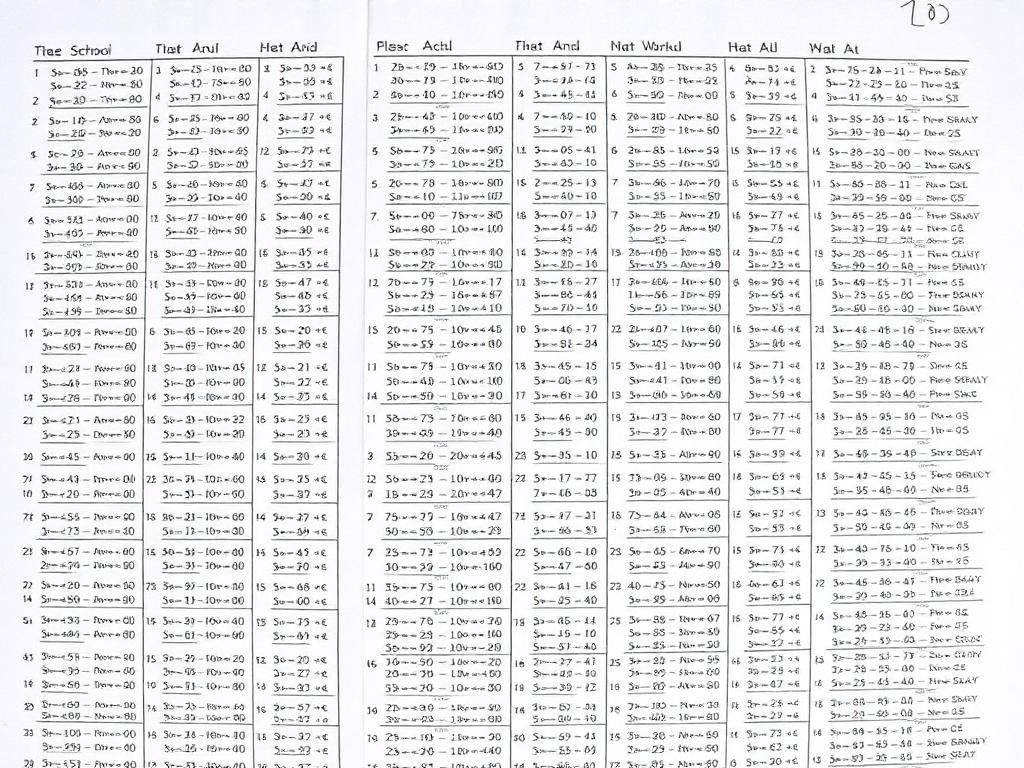
Small print, tight leading, items packed edge to edge.

Larger print, wide line spacing, fewer items per page, clear margin cue.
Spacing is not an accommodation for content; the reading or math demand is unchanged. Only the visual-efficiency load moved.
Say this
Set up the contrast: "Task layout: dense page versus spaced page."
Point at the before panel first. Small print, tight leading, items packed edge to edge.
Then the after panel. Larger print, wide line spacing, fewer items per page, clear margin cue.
My notes
Say this
Two-minute case. Read it aloud:
A Grade 4 student with an ADHD diagnosis loses his place while reading, skips lines, and finishes about half the passage. Medication is stable and he sustains attention well in a listening task.
Put the question to them: "How do you decide whether the reading breakdown is visual?" Give 60 seconds, no talking.
My notes
Say this
Reflection prompt: "Think about a student with a comorbid diagnosis. What one visual performance question would you add to the evaluation or IEP meeting?"
Offer the sentence starter: "I will ask: "When [student] does [occupation], what visual demand is hardest to meet?""
Think for one minute, write, then take two shares.
My notes
Say this
Knowledge check: "Which statement about dyslexia and vision is supported by evidence?"
Options:
• Dyslexia is caused by visual tracking problems and can be cured with eye exercises.
My notes
Say this
Transition: "Module 5."
My notes
Say this
Open here. "The Low-Vision Service Model." Usable vs. non-usable vision, and the environmental modifications that change performance today.
Say why this section matters for their caseload, then advance.
My notes
Say this
Ask the poll: "Which low-vision strategies have you already used?"
Options:
• Increased lighting or contrast
My notes
Say this
Frame the slide: "Two categories of clients drive two different plans."
Walk each point, one sentence each:
• Usable vision — the client can still use residual vision functionally with the right supports.
My notes
Environment
The page

Window beside or behind
Never seat a student facing an unshaded window — silhouetting collapses page contrast.
Task light on the working side
Directed onto the page from over the non-writing shoulder to avoid hand shadow and specular glare.
Matte surface + slant board
A non-glare mat and an angled surface raise effective contrast without changing the material.
Say this
Contrast the two columns: Environment versus The page.
Environment:
• Preferential seating closer to the front / instructional materials
My notes
Window beside or behind
Never seat a student facing an unshaded window — silhouetting collapses page contrast.
Task light on the working side
Directed onto the page from over the non-writing shoulder to avoid hand shadow and specular glare.
Matte surface + slant board
A non-glare mat and an angled surface raise effective contrast without changing the material.
Say this
Frame the slide: "Lighting is a modifiable variable, not a fixed constraint."
Walk each point, one sentence each:
• Light from behind, over the shoulder, close to the reading surface — avoid shadowing.
My notes
Say this
Contrast the two columns: Real-world contrast values versus What this means for classrooms.
Real-world contrast values:
• Exit sign: ~80% contrast
My notes
Say this
Talk over the visual: "What those contrast values actually look like."
Say the caption in your own words: The same worksheet line at ~90%, ~70%, ~40%, and ~10% contrast, plus reverse and tinted variants — hold a student handout next to these before assuming the print is usable.
My notes
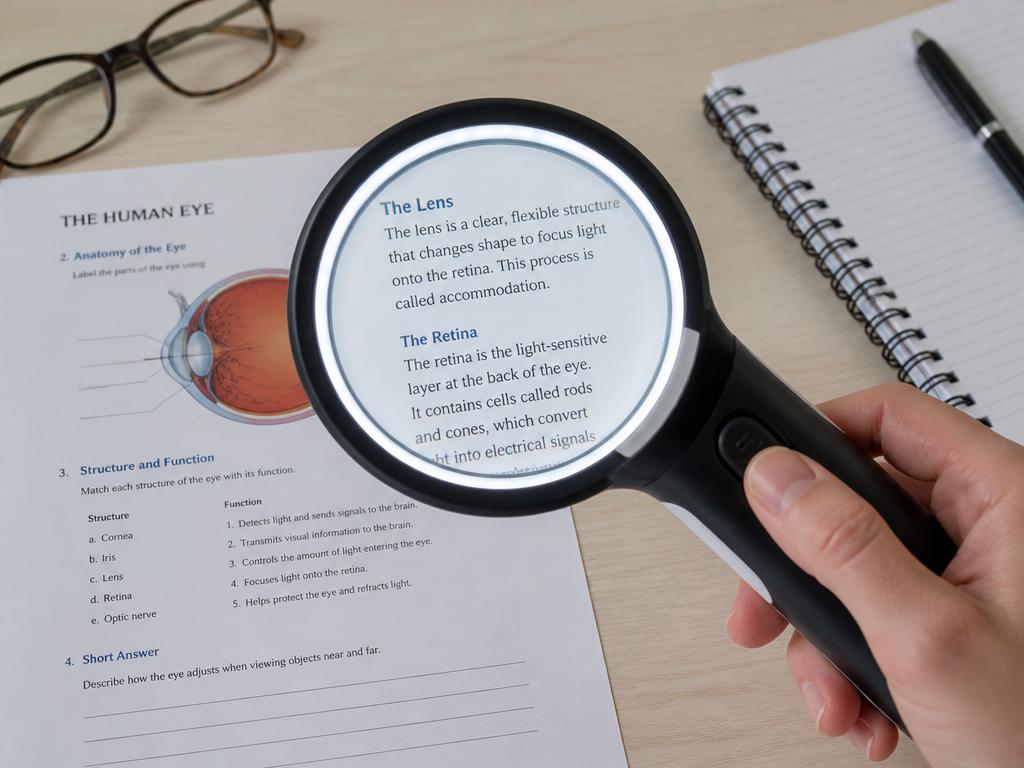
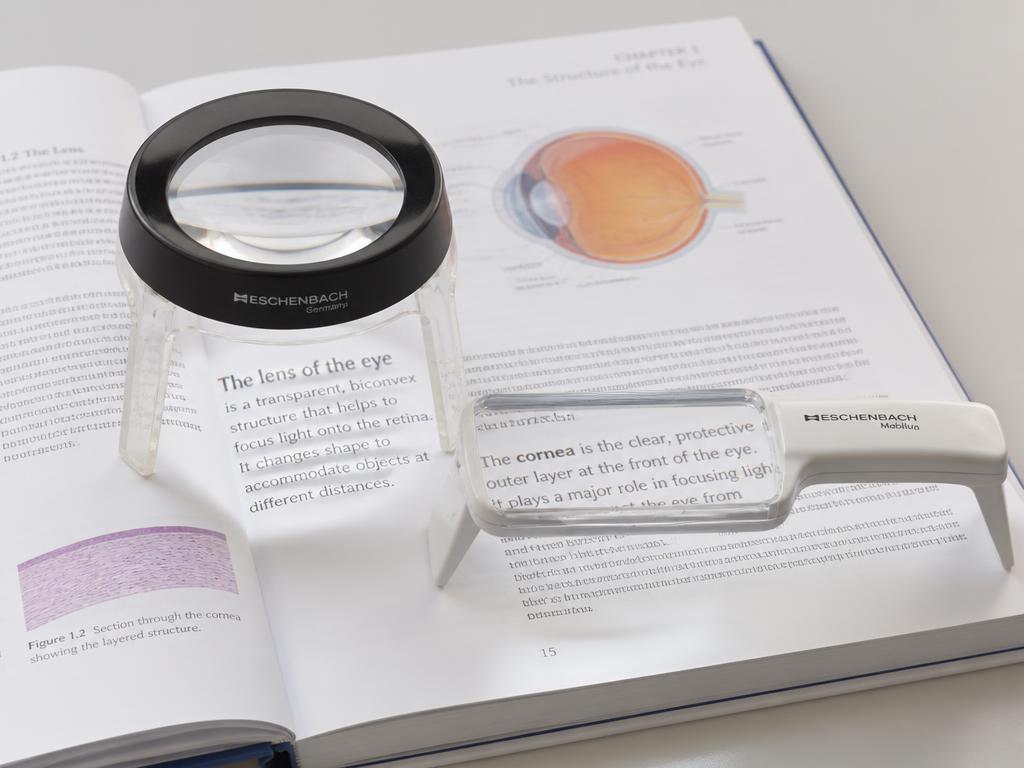
Handheld magnifier
Short spot tasks: price tags, labels, a single line of text.
Portable and cheap; requires a steady hand and short focal distance.
Stand magnifier
Sustained near work for students with tremor or poor motor control.
Fixed focal distance holds the lens steady; less portable, needs desk space.
Hands-free / spectacle
Writing and bimanual tasks where both hands must stay free.
Prescribed by the eye care team; very short working distance at high power.
Telescope (mono/binocular)
Distance targets: the board, signage, a demonstration across the room.
Spot use only — narrow field, not for travel or continuous viewing.
Electronic / video magnifier (CCTV)
Long reading and writing sessions; textbooks, worksheets, science labs.
Adds adjustable magnification, reverse contrast, and speech; cost and setup.
Built-in digital magnification
Phone/tablet zoom, text enlargement, VoiceOver, screen readers.
Already in the student’s hands and free; teach it before purchasing hardware.
Say this
Talk over the visual: "Magnification options, side by side."
Say the caption in your own words: Handheld, stand, spectacle/telescope, electronic (CCTV), and built-in digital magnification — each with its own working distance and field trade-off.
My notes
Say this
Frame the slide: "Low vision: what OT addresses, and when OT refers."
Walk each point, one sentence each:
• Diagnosed acuity loss: magnify, enlarge, control working distance, seat for the task.
My notes
Optical and electronic magnification
Everyday and digital AT
Handheld magnifier
Short spot tasks: price tags, labels, a single line of text.
Portable and cheap; requires a steady hand and short focal distance.
Stand magnifier
Sustained near work for students with tremor or poor motor control.
Fixed focal distance holds the lens steady; less portable, needs desk space.
Hands-free / spectacle
Writing and bimanual tasks where both hands must stay free.
Prescribed by the eye care team; very short working distance at high power.
Telescope (mono/binocular)
Distance targets: the board, signage, a demonstration across the room.
Spot use only — narrow field, not for travel or continuous viewing.
Electronic / video magnifier (CCTV)
Long reading and writing sessions; textbooks, worksheets, science labs.
Adds adjustable magnification, reverse contrast, and speech; cost and setup.
Built-in digital magnification
Phone/tablet zoom, text enlargement, VoiceOver, screen readers.
Already in the student’s hands and free; teach it before purchasing hardware.
Say this
Contrast the two columns: Optical and electronic magnification versus Everyday and digital AT.
Optical and electronic magnification:
• Handheld, stand, and hands-free magnifiers for near tasks
My notes
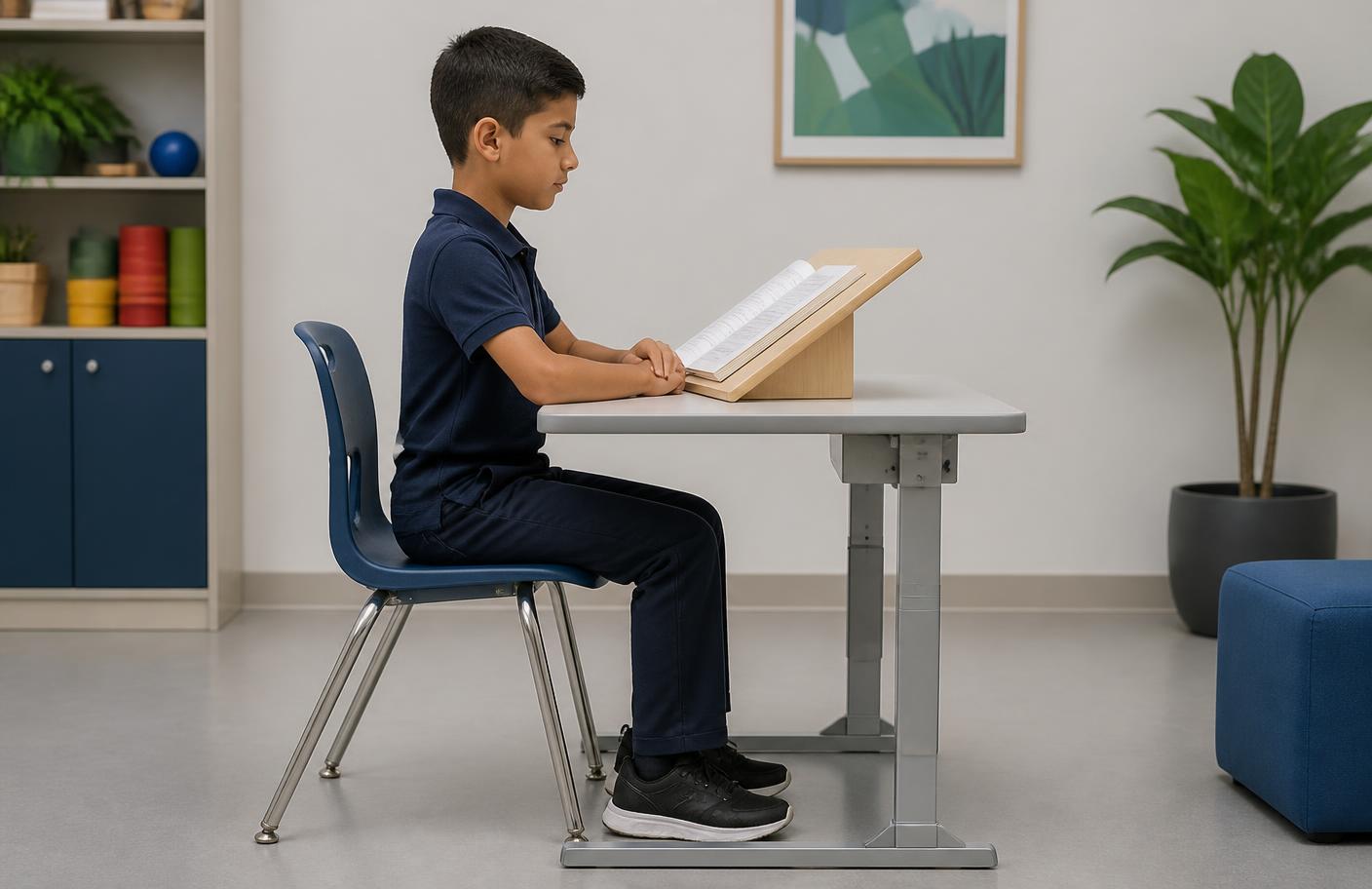
Reference posture
Feet flat, hips and knees near 90°, elbows at desk height, trunk upright and off the table.
≈40 cm at midline
A slant board holds the page at a consistent distance and angle; note any habitual 15–20 cm posture.
What to document
Head tilt, page rotation >30°, one eye closing, or distance shortening as the task lengthens.
Say this
Frame the slide: "Organization, mobility, and multisensory support."
Walk each point, one sentence each:
• Teach organization strategies (one master notebook, home/school large-print duplicates, time management).
My notes
Say this
Read the scenario aloud, slowly:
A student has documented low vision (usable, functional vision with correction) and a separate visual-processing profile with figure-ground weakness. The IEP team asks for one classroom modification plan.
Then put these questions to the room:
My notes
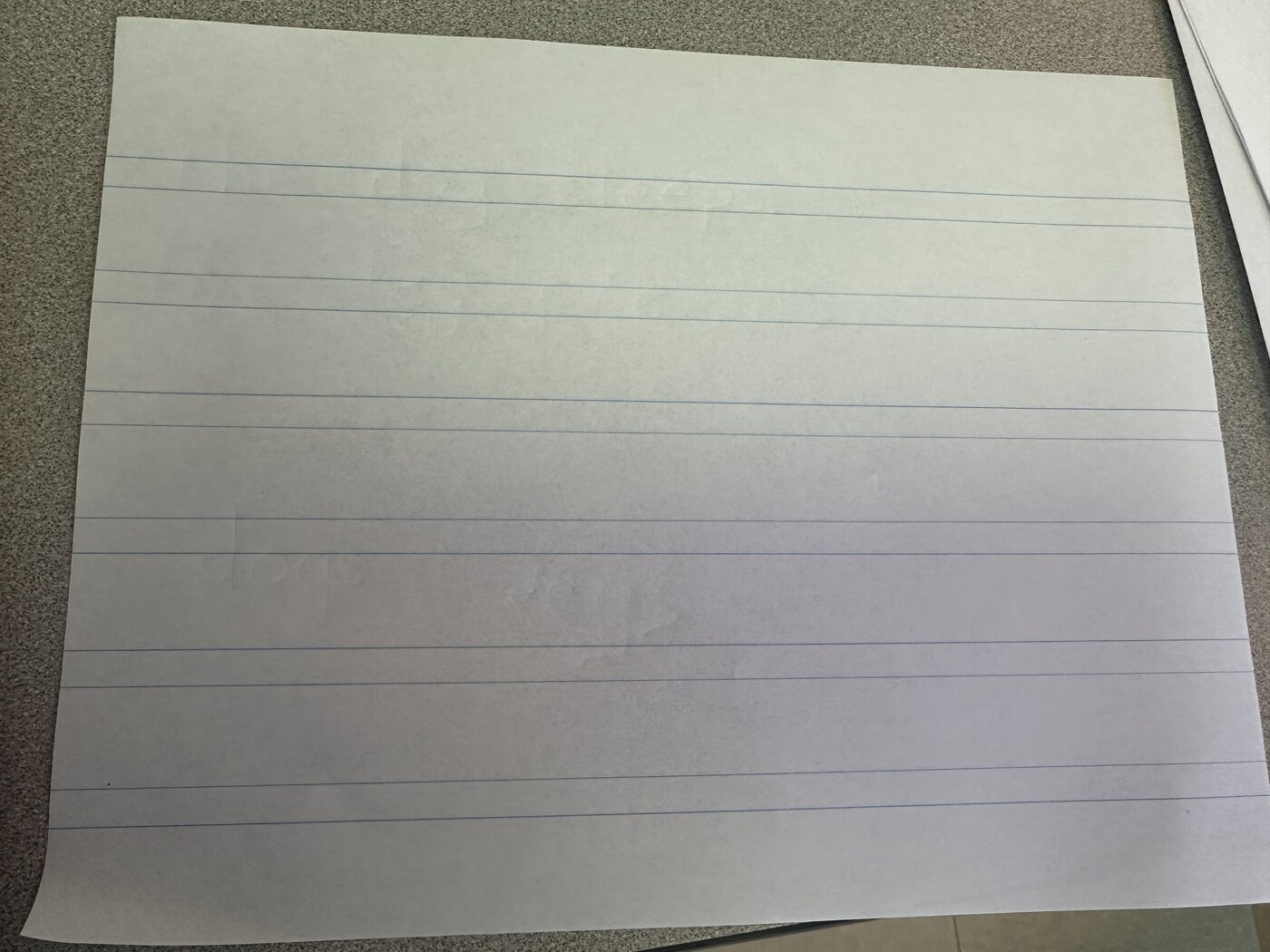
Two lines define one body space, so the writing target is on the page instead of in the head.

A high-contrast band fills the body space; the baseline becomes a boundary, not a guess.
Two-line paper is already a visual support; highlighting the body space adds contrast for students with documented access needs. Plain or three-line paper is the confusing option. Both of these are Level 1 access modifications you can put on the desk today.
Say this
Set up the contrast: "Paper choice is a visual support."
Point at the before panel first. Two lines define one body space, so the writing target is on the page instead of in the head.
Then the after panel. A high-contrast band fills the body space; the baseline becomes a boundary, not a guess.
My notes
Say this
Set up the clip in one sentence, play it, then debrief with "what did you notice?"
My notes
Say this
Talk over the visual: "Where low vision sits in the framework."
Say the caption in your own words: Low vision is a Level 1 access problem. Contrast, lighting, and magnification restore the floor so the higher levels can be measured at all.
My notes
Say this
Land the "so what": When you change the environment and output improves the same day, you have learned something about the student, not just helped them.
Explain the mechanism plainly: A demand mismatch responds immediately to a change in demand; a capacity limit does not.
Then give them the moves — say each one as something they can do Monday:
My notes

Overlapping papers, patterned surface, busy wall directly behind the work.
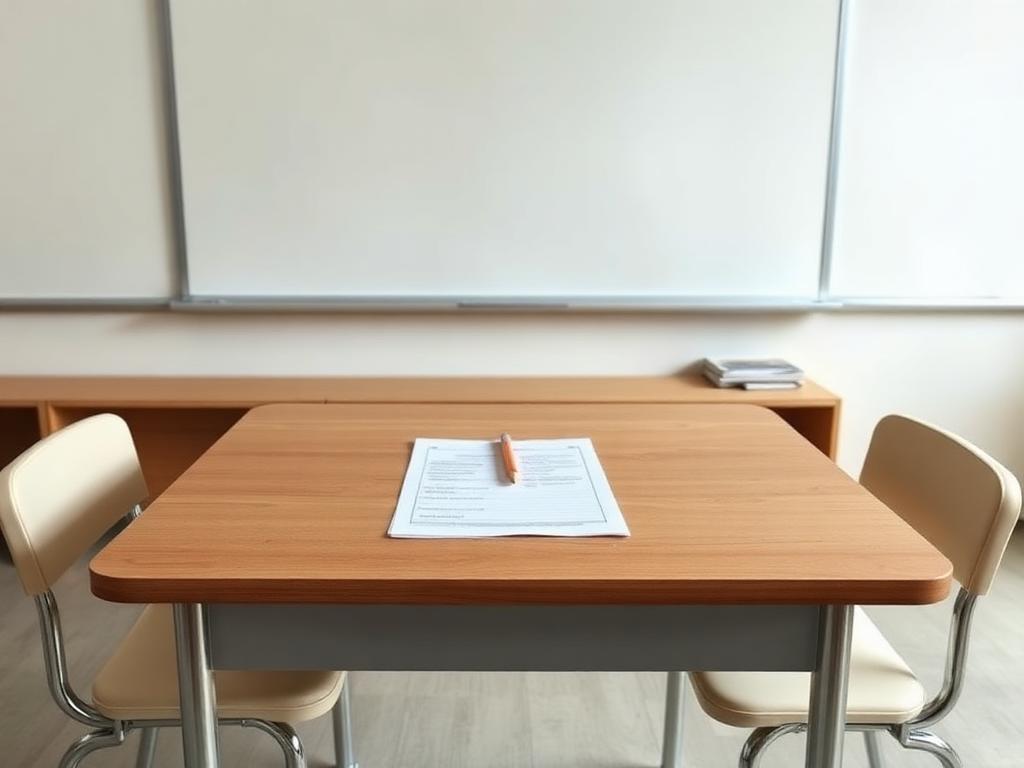
One page, one tool, plain background, work placed in midline.
Change one variable at a time. If output improves with clutter removed, you have found a demand problem, not a capacity problem.
Say this
Set up the contrast: "Visual clutter: the same student, two desks."
Point at the before panel first. Overlapping papers, patterned surface, busy wall directly behind the work.
Then the after panel. One page, one tool, plain background, work placed in midline.
My notes
Say this
Two-minute case. Read it aloud:
You want to help a student who cannot copy from the board. The teacher offers to move his seat, enlarge the print, give him a printed copy, and add a slant board all at once.
Put the question to them: "What do you ask her to do instead, and why?" Give 60 seconds, no talking.
My notes
Say this
Reflection prompt: "Choose one occupation from your caseload or life. Describe one modification at each of the four low-vision levels for that occupation."
Offer the sentence starter: "For [occupation]: increasing visibility means... enhancing the signal means... substitution means..."
Think for one minute, write, then take two shares.
My notes
Say this
Knowledge check: "Which strategy is an example of "enhancing" the visual signal?"
Options:
• Adding a desk lamp
My notes
Say this
Transition: "Module 6."
My notes
Say this
Open here. "Where This Goes Next." From observation to structure, and from structure to measurement.
Say why this section matters for their caseload, then advance.
My notes
Say this
Ask the poll: "After today, what is your honest next step with visual performance?"
Options:
• Start describing it in my notes this week
My notes
Say this
Frame the slide: "Five blocks in, here is the skill set."
Walk each point, one sentence each:
• You can describe visual performance in occupational language instead of diagnostic language.
My notes
Say this
Talk over the visual: "Which level each block of this course was operating on."
Say the caption in your own words: Blocks 1–6 mapped to the five-level framework, so your documentation language matches the level the finding actually came from.
My notes
Say this
Frame the slide: "Observation alone is unordered."
Walk each point, one sentence each:
• Two therapists watching the same client notice different things and prioritize differently.
My notes
Say this
Contrast the two columns: What it does versus What it is not.
What it does:
• Tells you where to look first, because foundational levels constrain higher ones
My notes
Say this
Frame the slide: "What the VPA™ adds on top of structure."
Walk each point, one sentence each:
• A standardized administration and scoring procedure, taught in Course 2.
My notes
Say this
Read the scenario aloud, slowly:
Take the client you have had in mind through this session. You are going to leave with a written plan, not a general intention.
Then put these questions to the room:
My notes
Say this
Contrast the two columns: Course 1 — The Five-Level Visual Performance Framework versus Course 2 — The VPA™: Assessment & Clinical Reasoning.
Course 1 — The Five-Level Visual Performance Framework:
• 3.0 contact hours · 0.3 AOTA CEUs · $49
My notes
Say this
Set up the clip in one sentence, play it, then debrief with "what did you notice?"
My notes
Say this
Land the "so what": Everything in this course improves your hypotheses. It does not yet give you a score you can report, monitor, or defend.
Explain the mechanism plainly: Structured, performance-based assessment is what converts a good observation into a measurable present level and a progress line.
Then give them the moves — say each one as something they can do Monday:
My notes
Say this
Reflection prompt: "Write the functional description, the referral decision with rationale, and the Monday modification with the observable indicator you will watch."
Offer the sentence starter: "Functional description:... Referral decision:... because... Monday modification:... I will watch for..."
Think for one minute, write, then take two shares.
My notes
Say this
Knowledge check: "What does a level-based structure add that a list of observations does not?"
Options:
• A medical diagnosis for the visual finding
My notes
Say this
Talk through this close step in Module 6.
My notes