Back to CEU courses

Presenter study handout

Why Visual Performance Matters: Foundations for Occupational Therapy Practice

3 contact hours · 0.3 AOTA CEUs · Module 4 · 17 slides

Presenter-side material. Each block shows the slide as the audience sees it, the talk track, and space for your own notes. Model answers appear here — do not hand this version to learners.

Module 4

4.1 — Module 4

Transition

Module 4

Module 4

Why Visual Performance Matters: Foundations for Occupational Therapy Practice
1 / 17

Say this

Transition: "Module 4."

My notes

4.2 — Comorbidity Patterns

Title

Module 4

Comorbidity Patterns

Autism, ADHD, dyslexia, and dysgraphia — visual performance signs, not causation.

Why Visual Performance Matters: Foundations for Occupational Therapy Practice
2 / 17
  • Autism, ADHD, dyslexia, and dysgraphia — visual performance signs, not causation.

Say this

Open here. "Comorbidity Patterns." Autism, ADHD, dyslexia, and dysgraphia — visual performance signs, not causation.

Say why this section matters for their caseload, then advance.

My notes

4.3 — Comorbidity reality

Poll

Poll

Comorbidity reality

In your practice, when a student has a diagnosis like ADHD or dyslexia, how often is a visual contribution also checked?

Why Visual Performance Matters: Foundations for Occupational Therapy Practice
3 / 17
  • In your practice, when a student has a diagnosis like ADHD or dyslexia, how often is a visual contribution also checked?
  • – Always
  • – Usually
  • – Rarely
  • – Never

Say this

Ask the poll: "In your practice, when a student has a diagnosis like ADHD or dyslexia, how often is a visual contribution also checked?"

Options:

• Always

• Usually

• Rarely

• Never

Take a show of hands or the on-screen tally, then name the pattern you see before advancing.

My notes

4.4 — Association is not causation

Teaching slide

Framing

Association is not causation

  • These four conditions frequently co-occur with visual performance differences — the visual finding does not cause the diagnosis.
  • OT describes the visual sign and its occupational impact; OT does not attribute a diagnosis to a visual cause.
  • About 1 in 4 school-age children may have an undiagnosed vision problem affecting academics (Kleinstein et al., 2003, CLEERE).
  • These patterns raise suspicion for a referral — they do not replace one.
Visual performanceAttention / ADHDReading / dysgraphia
Overlapping presentations. Shared surface behaviors do not mean shared mechanism — describe what you observed and how conditions changed it.
Why Visual Performance Matters: Foundations for Occupational Therapy Practice
4 / 17
  • These four conditions frequently co-occur with visual performance differences — the visual finding does not cause the diagnosis.
  • OT describes the visual sign and its occupational impact; OT does not attribute a diagnosis to a visual cause.
  • About 1 in 4 school-age children may have an undiagnosed vision problem affecting academics (Kleinstein et al., 2003, CLEERE).
  • These patterns raise suspicion for a referral — they do not replace one.

Say this

Frame the slide: "Association is not causation."

Walk each point, one sentence each:

• These four conditions frequently co-occur with visual performance differences — the visual finding does not cause the diagnosis.

• OT describes the visual sign and its occupational impact; OT does not attribute a diagnosis to a visual cause.

• About 1 in 4 school-age children may have an undiagnosed vision problem affecting academics (Kleinstein et al., 2003, CLEERE).

• These patterns raise suspicion for a referral — they do not replace one.

Point at the figure while you talk — name the parts before the labels.

Close with: "If you only take one of these back, take the first one."

My notes

4.5 — Visual performance signs associated with autism

Comparison

Autism

Visual performance signs associated with autism

What is reported

  • Reduced eye contact or difficulty sustaining visual focus
  • Difficulty tracking moving objects
  • Visual hypersensitivity; avoids visually busy settings
  • Figure-ground difficulty in cluttered environments

Occupational impact

  • Face recognition and disorganization with visual materials
  • Reduced reading of expressions and nonverbal cues
  • Strabismus reported at 1.8–8.3% in autism (Holhoș et al., 2022) — association only
  • Magnocellular associations reported; mechanism unsettled

Dyslexia — deficit in ≥1 visual-processing domain

73%

JAMA, cited in VML clinical education

Dyslexia — unstable eye dominance

63%

VML clinical education

Students with an undiagnosed visual problem affecting academics

25%

Kleinstein

ADHD — reported unspecified vision problem

16%

Bellato et al.

Autism — reported strabismus prevalence (range)

8%

1.8–8.3%, Holhos et al.

Children under 18 with a diagnosed visual condition

6.8%

CDC

Reported co-occurrence rates. These raise the index of suspicion for a referral — they are associations, not causal explanations, and none of them is an OT diagnosis.
Why Visual Performance Matters: Foundations for Occupational Therapy Practice
5 / 17
  • What is reported: Reduced eye contact or difficulty sustaining visual focus · Difficulty tracking moving objects · Visual hypersensitivity; avoids visually busy settings · Figure-ground difficulty in cluttered environments
  • Occupational impact: Face recognition and disorganization with visual materials · Reduced reading of expressions and nonverbal cues · Strabismus reported at 1.8–8.3% in autism (Holhoș et al., 2022) — association only · Magnocellular associations reported; mechanism unsettled

Say this

Contrast the two columns: What is reported versus Occupational impact.

What is reported:

• Reduced eye contact or difficulty sustaining visual focus

• Difficulty tracking moving objects

• Visual hypersensitivity; avoids visually busy settings

• Figure-ground difficulty in cluttered environments

Occupational impact:

• Face recognition and disorganization with visual materials

• Reduced reading of expressions and nonverbal cues

• Strabismus reported at 1.8–8.3% in autism (Holhoș et al., 2022) — association only

• Magnocellular associations reported; mechanism unsettled

Ask: "Which column is your student living in right now?"

My notes

4.6 — Visual performance signs associated with ADHD

Comparison

ADHD

Visual performance signs associated with ADHD

What is reported

  • Difficulty sustaining focus on visual tasks; easily distracted
  • Struggles tracking words across a page; frequent place loss
  • Trouble filtering important visual details from background clutter

Occupational impact

  • Difficulty recalling visual details; needs repetition to interpret visual information
  • Impulsive, rushed visual task completion with disorganized output
  • ~16% report an unspecified vision problem (Bellato et al., 2023, systematic review); higher reported likelihood of convergence issues (Koscinski, 2022, narrative review) — co-occurrence only, not causation
Why Visual Performance Matters: Foundations for Occupational Therapy Practice
6 / 17
  • What is reported: Difficulty sustaining focus on visual tasks; easily distracted · Struggles tracking words across a page; frequent place loss · Trouble filtering important visual details from background clutter
  • Occupational impact: Difficulty recalling visual details; needs repetition to interpret visual information · Impulsive, rushed visual task completion with disorganized output · ~16% report an unspecified vision problem (Bellato et al., 2023, systematic review); higher reported likelihood of convergence issues (Koscinski, 2022, narrative review) — co-occurrence only, not causation

Say this

Contrast the two columns: What is reported versus Occupational impact.

What is reported:

• Difficulty sustaining focus on visual tasks; easily distracted

• Struggles tracking words across a page; frequent place loss

• Trouble filtering important visual details from background clutter

Occupational impact:

• Difficulty recalling visual details; needs repetition to interpret visual information

• Impulsive, rushed visual task completion with disorganized output

• ~16% report an unspecified vision problem (Bellato et al., 2023, systematic review); higher reported likelihood of convergence issues (Koscinski, 2022, narrative review) — co-occurrence only, not causation

Ask: "Which column is your student living in right now?"

My notes

4.7 — Visual performance signs associated with dyslexia

Comparison

Dyslexia

Visual performance signs associated with dyslexia

What is reported

  • Letter or number reversals; misaligned text or math columns
  • Difficulty focusing on relevant text amid a page (figure-ground)
  • Difficulty following lines of text; challenges with saccadic movement
  • Struggles recalling letter order or spelling from visual memory

Reported associations

  • 73% show deficits in at least one visual-processing domain (reported in the dyslexia visual-processing literature; observational samples, not a population prevalence)
  • 63% show unstable eye dominance (same observational literature)
  • Significant magnocellular correlation reported (Greatrex et al., observational)
  • AAP / AAO / AAPOS joint statement: dyslexia is a language-based disorder; visual findings are correlates, not causes, and vision treatment is not a treatment for dyslexia
Why Visual Performance Matters: Foundations for Occupational Therapy Practice
7 / 17
  • What is reported: Letter or number reversals; misaligned text or math columns · Difficulty focusing on relevant text amid a page (figure-ground) · Difficulty following lines of text; challenges with saccadic movement · Struggles recalling letter order or spelling from visual memory
  • Reported associations: 73% show deficits in at least one visual-processing domain (reported in the dyslexia visual-processing literature; observational samples, not a population prevalence) · 63% show unstable eye dominance (same observational literature) · Significant magnocellular correlation reported (Greatrex et al., observational) · AAP / AAO / AAPOS joint statement: dyslexia is a language-based disorder; visual findings are correlates, not causes, and vision treatment is not a treatment for dyslexia

Say this

Contrast the two columns: What is reported versus Reported associations.

What is reported:

• Letter or number reversals; misaligned text or math columns

• Difficulty focusing on relevant text amid a page (figure-ground)

• Difficulty following lines of text; challenges with saccadic movement

• Struggles recalling letter order or spelling from visual memory

Reported associations:

• 73% show deficits in at least one visual-processing domain (reported in the dyslexia visual-processing literature; observational samples, not a population prevalence)

• 63% show unstable eye dominance (same observational literature)

• Significant magnocellular correlation reported (Greatrex et al., observational)

• AAP / AAO / AAPOS joint statement: dyslexia is a language-based disorder; visual findings are correlates, not causes, and vision treatment is not a treatment for dyslexia

Ask: "Which column is your student living in right now?"

My notes

4.8 — Visual performance signs associated with dysgraphia

Teaching slide

Dysgraphia

Visual performance signs associated with dysgraphia

  • Illegible handwriting; struggles with letter formation, alignment, and spacing.
  • Difficulty sustaining visual attention on writing tasks, producing incomplete or messy work.
  • Frustration on precision visual-motor tasks such as drawing shapes or copying diagrams.
  • This is a Level 4 visual-motor integration signature in a structured visual performance framework, treatable directly in OT — the framework that defines these levels is taught in Course 1.
Letter formationInconsistent starting points; reversals persist past age expectation
SpacingWord gaps vary within the same line
AlignmentBaseline drift increases with line count
SizingLetter height grows across the page
RateOutput slows sharply after ~5 minutes
RecognitionCopies accurately when given an enlarged, isolated model
A Level 4 visual-motor integration signature associated with dysgraphia. Note the last row: accurate copying with an isolated model separates an output problem from a perception problem.
Why Visual Performance Matters: Foundations for Occupational Therapy Practice
8 / 17
  • Illegible handwriting; struggles with letter formation, alignment, and spacing.
  • Difficulty sustaining visual attention on writing tasks, producing incomplete or messy work.
  • Frustration on precision visual-motor tasks such as drawing shapes or copying diagrams.
  • This is a Level 4 visual-motor integration signature in a structured visual performance framework, treatable directly in OT — the framework that defines these levels is taught in Course 1.

Say this

Frame the slide: "Visual performance signs associated with dysgraphia."

Walk each point, one sentence each:

• Illegible handwriting; struggles with letter formation, alignment, and spacing.

• Difficulty sustaining visual attention on writing tasks, producing incomplete or messy work.

• Frustration on precision visual-motor tasks such as drawing shapes or copying diagrams.

• This is a Level 4 visual-motor integration signature in a structured visual performance framework, treatable directly in OT — the framework that defines these levels is taught in Course 1.

Point at the figure while you talk — name the parts before the labels.

Close with: "If you only take one of these back, take the first one."

My notes

4.9 — The numbers behind the urgency

Teaching slide

Why this matters

The numbers behind the urgency

  • 1 in 4 school-age children are estimated to have an undiagnosed vision problem affecting academics (Kleinstein et al., 2003, population-based cohort).
  • 6.8% of children under 18 have a diagnosed visual condition; 3% are blind or visually impaired (CDC surveillance data). These are co-occurrence figures, not causal claims.
  • A visual performance sign inside any of these four diagnoses is a prompt for OT documentation and referral — not for OT diagnosis of the visual disorder.

Dyslexia — deficit in ≥1 visual-processing domain

73%

JAMA, cited in VML clinical education

Dyslexia — unstable eye dominance

63%

VML clinical education

Students with an undiagnosed visual problem affecting academics

25%

Kleinstein

ADHD — reported unspecified vision problem

16%

Bellato et al.

Autism — reported strabismus prevalence (range)

8%

1.8–8.3%, Holhos et al.

Children under 18 with a diagnosed visual condition

6.8%

CDC

Reported co-occurrence rates. These raise the index of suspicion for a referral — they are associations, not causal explanations, and none of them is an OT diagnosis.
Why Visual Performance Matters: Foundations for Occupational Therapy Practice
9 / 17
  • 1 in 4 school-age children are estimated to have an undiagnosed vision problem affecting academics (Kleinstein et al., 2003, population-based cohort).
  • 6.8% of children under 18 have a diagnosed visual condition; 3% are blind or visually impaired (CDC surveillance data). These are co-occurrence figures, not causal claims.
  • A visual performance sign inside any of these four diagnoses is a prompt for OT documentation and referral — not for OT diagnosis of the visual disorder.

Say this

Frame the slide: "The numbers behind the urgency."

Walk each point, one sentence each:

• 1 in 4 school-age children are estimated to have an undiagnosed vision problem affecting academics (Kleinstein et al., 2003, population-based cohort).

• 6.8% of children under 18 have a diagnosed visual condition; 3% are blind or visually impaired (CDC surveillance data). These are co-occurrence figures, not causal claims.

• A visual performance sign inside any of these four diagnoses is a prompt for OT documentation and referral — not for OT diagnosis of the visual disorder.

Point at the figure while you talk — name the parts before the labels.

Close with: "If you only take one of these back, take the first one."

My notes

4.10 — A comorbidity pattern in a real referral

Case

Application

A comorbidity pattern in a real referral

A 5th-grade student with an ADHD diagnosis is referred for "poor handwriting and inattention." During your session he loses his place three times in one paragraph and cannot locate his pencil among other items on the desk.

  • Q1.Which findings are visual-performance signs worth documenting separately from the ADHD diagnosis?
  • Q2.What would your present-level sentence say, and what referral (if any) would accompany it?
What you observeMore consistent withNext OT move
Slow, effortful letter or sight-word recognitionVentralDescribe identification accuracy and rate; reduce visual detail load
Confuses visually similar letters past expected ageVentralSample discrimination directly; refer if acuity untested this year
Loses place returning from board to pageDorsalLine marker, copy-reduction; screen saccades and fixation stability
Bumps furniture, misjudges distance in transitionsDorsalEnvironmental path clearing; refer for binocular/depth evaluation
Cannot copy a graph, map, or math column layoutDorsalPre-structured paper, spatial cueing; document spatial organization
Strong on movement tasks, weak on detail tasksVentralContrast this split explicitly in the present-level statement
Sorting a “what” problem from a “where” problem in the classroom. Stream language is for your reasoning; the documentation stays in occupational terms.
Why Visual Performance Matters: Foundations for Occupational Therapy Practice
10 / 17
  • A 5th-grade student with an ADHD diagnosis is referred for "poor handwriting and inattention." During your session he loses his place three times in one paragraph and cannot locate his pencil among other items on the desk.
  • Q1. Which findings are visual-performance signs worth documenting separately from the ADHD diagnosis?
  • Q2. What would your present-level sentence say, and what referral (if any) would accompany it?

Say this

Read the scenario aloud, slowly:

A 5th-grade student with an ADHD diagnosis is referred for "poor handwriting and inattention." During your session he loses his place three times in one paragraph and cannot locate his pencil among other items on the desk.

Then put these questions to the room:

• Which findings are visual-performance signs worth documenting separately from the ADHD diagnosis?

• What would your present-level sentence say, and what referral (if any) would accompany it?

Give 60 seconds of think time before you take answers. Model answers are in the panel beside this script.

My notes

4.11 — Module 4 video — comorbidity patterns and OT documentation

Video

Lecture

Module 4 video — comorbidity patterns and OT documentation

Why Visual Performance Matters: Foundations for Occupational Therapy Practice
11 / 17
  • Walkthrough of the four comorbidity profiles and scope-safe phrasing.

Say this

Set up the clip in one sentence, play it, then debrief with "what did you notice?"

My notes
4.12 — A visual-motor signature on the page — and what changed it

Before / after

Work sample

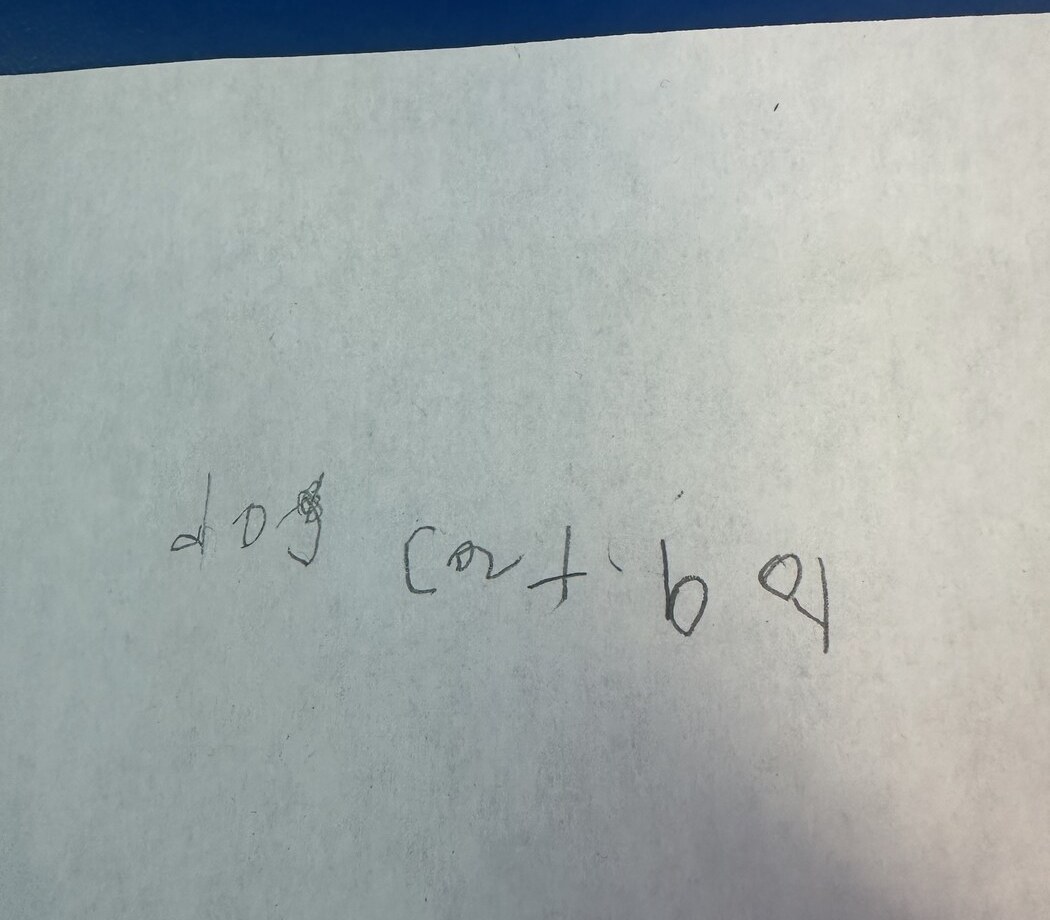
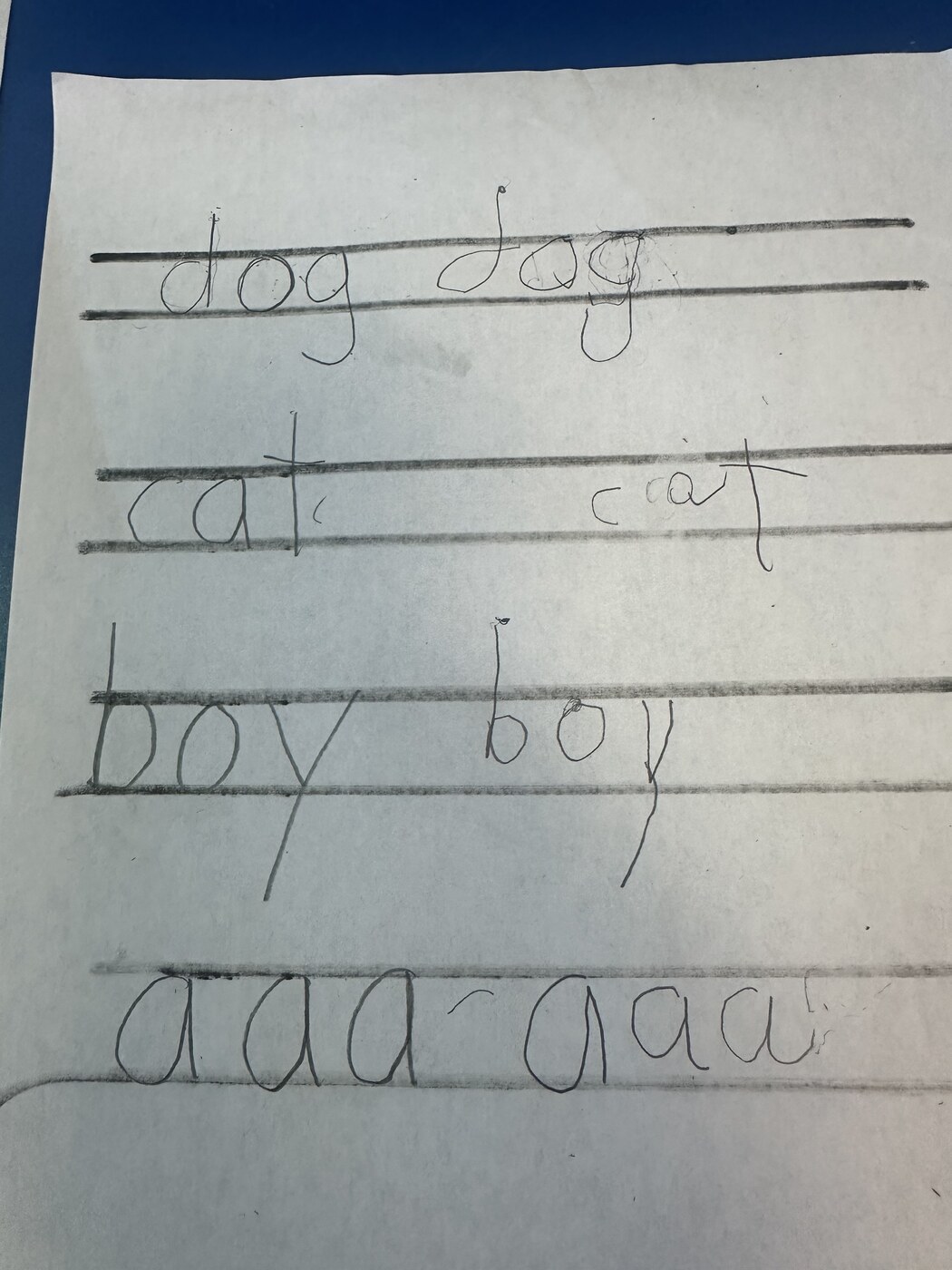
A visual-motor signature on the page — and what changed it

Unlined paper

Same student, same words, no external spatial structure.
Same student, same words, no external spatial structure.

  • • Letter size drifts word to word; no consistent body height.
  • • Spacing between words is inconsistent and the line drifts downward.
  • • Letter formation breaks down as the line goes on (endurance, not knowledge).

Two-line paper with a defined body space

The visual boundary is supplied by the page instead of held in the head.

The visual boundary is supplied by the page instead of held in the head.

  • • Size becomes consistent because the target is visible.
  • • Baseline and descenders land where they belong.
  • • Output improves without any change to the writing prompt itself.

This is a spacing, alignment, and formation problem — a visual-motor integration signature — not a motivation or handwriting-instruction problem. Document what you observed, modify the page today, and refer if no eye exam is on file.

Why Visual Performance Matters: Foundations for Occupational Therapy Practice
12 / 17
  • Unlined paper: Same student, same words, no external spatial structure. · Letter size drifts word to word; no consistent body height. · Spacing between words is inconsistent and the line drifts downward. · Letter formation breaks down as the line goes on (endurance, not knowledge).
  • Two-line paper with a defined body space: The visual boundary is supplied by the page instead of held in the head. · Size becomes consistent because the target is visible. · Baseline and descenders land where they belong. · Output improves without any change to the writing prompt itself.
  • Takeaway: This is a spacing, alignment, and formation problem — a visual-motor integration signature — not a motivation or handwriting-instruction problem. Document what you observed, modify the page today, and refer if no eye exam is on file.

Say this

Set up the contrast: "A visual-motor signature on the page — and what changed it."

Point at the before panel first. Same student, same words, no external spatial structure.

Then the after panel. The visual boundary is supplied by the page instead of held in the head.

Say the rule out loud: This is a spacing, alignment, and formation problem — a visual-motor integration signature — not a motivation or handwriting-instruction problem. Document what you observed, modify the page today, and refer if no eye exam is on file.

Ask: "What did we change — the child, or the demand?"

My notes

4.13 — So what? Co-occurrence is the norm, not the exception

So what?

So what?

So what? Co-occurrence is the norm, not the exception

Autism, ADHD, dyslexia, and dysgraphia all produce behavior that overlaps with visual-performance findings. Treating one and ignoring the other stalls the student.

Overlapping presentations share observable behavior but differ in the conditions that change performance.

What you do with it

  • Manipulate one visual condition and see whether performance moves.
  • Keep both hypotheses alive in your documentation instead of choosing early.
  • Coordinate with the SLP, teacher, and psychologist on what each of you is testing.

Watch for

Performance that changes with a visual manipulation but not with an attention support, or the reverse.

Why Visual Performance Matters: Foundations for Occupational Therapy Practice
13 / 17
  • Autism, ADHD, dyslexia, and dysgraphia all produce behavior that overlaps with visual-performance findings. Treating one and ignoring the other stalls the student.
  • Because: Overlapping presentations share observable behavior but differ in the conditions that change performance.
  • Move: Manipulate one visual condition and see whether performance moves.
  • Move: Keep both hypotheses alive in your documentation instead of choosing early.
  • Move: Coordinate with the SLP, teacher, and psychologist on what each of you is testing.
  • Watch for: Performance that changes with a visual manipulation but not with an attention support, or the reverse.

Say this

Land the "so what": Autism, ADHD, dyslexia, and dysgraphia all produce behavior that overlaps with visual-performance findings. Treating one and ignoring the other stalls the student.

Explain the mechanism plainly: Overlapping presentations share observable behavior but differ in the conditions that change performance.

Then give them the moves — say each one as something they can do Monday:

• Manipulate one visual condition and see whether performance moves.

• Keep both hypotheses alive in your documentation instead of choosing early.

• Coordinate with the SLP, teacher, and psychologist on what each of you is testing.

Tell them what success looks like: Performance that changes with a visual manipulation but not with an attention support, or the reverse.

Ask: "Who has a student this describes right now?" Take one answer, then move.

My notes
4.14 — Task layout: dense page versus spaced page

Before / after

Change the demand

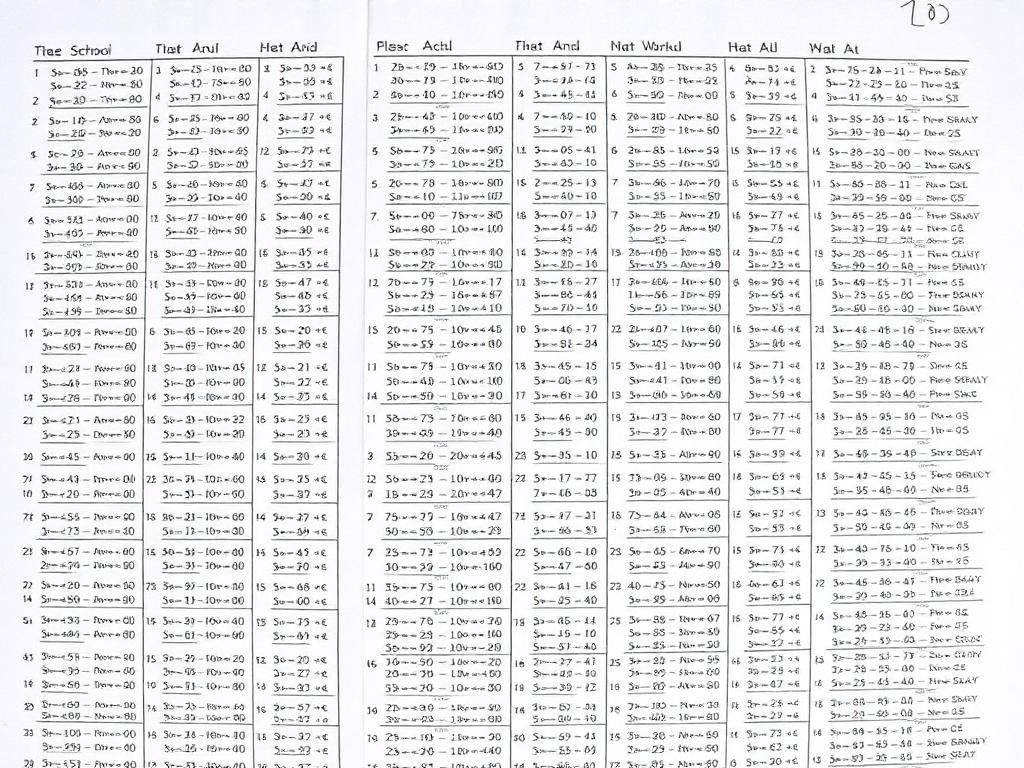
Task layout: dense page versus spaced page

Before — dense layout

Small print, tight leading, items packed edge to edge.

Small print, tight leading, items packed edge to edge.

  • • Return sweeps land on the wrong line
  • • Skipped and repeated items look like carelessness

After — spaced layout

Larger print, wide line spacing, fewer items per page, clear margin cue.

Larger print, wide line spacing, fewer items per page, clear margin cue.

  • • Line-finding demand drops without lowering the academic demand
  • • Accuracy rises before speed does — expect that order

Spacing is not an accommodation for content; the reading or math demand is unchanged. Only the visual-efficiency load moved.

Why Visual Performance Matters: Foundations for Occupational Therapy Practice
14 / 17
  • Before — dense layout: Small print, tight leading, items packed edge to edge. · Return sweeps land on the wrong line · Skipped and repeated items look like carelessness
  • After — spaced layout: Larger print, wide line spacing, fewer items per page, clear margin cue. · Line-finding demand drops without lowering the academic demand · Accuracy rises before speed does — expect that order
  • Takeaway: Spacing is not an accommodation for content; the reading or math demand is unchanged. Only the visual-efficiency load moved.

Say this

Set up the contrast: "Task layout: dense page versus spaced page."

Point at the before panel first. Small print, tight leading, items packed edge to edge.

Then the after panel. Larger print, wide line spacing, fewer items per page, clear margin cue.

Say the rule out loud: Spacing is not an accommodation for content; the reading or math demand is unchanged. Only the visual-efficiency load moved.

Ask: "What did we change — the child, or the demand?"

My notes

4.15 — Two-minute case: vision, attention, or both?

Mini case

Two-minute case

Two-minute case: vision, attention, or both?

A Grade 4 student with an ADHD diagnosis loses his place while reading, skips lines, and finishes about half the passage. Medication is stable and he sustains attention well in a listening task.

How do you decide whether the reading breakdown is visual?

Why Visual Performance Matters: Foundations for Occupational Therapy Practice
15 / 17
  • A Grade 4 student with an ADHD diagnosis loses his place while reading, skips lines, and finishes about half the passage. Medication is stable and he sustains attention well in a listening task.
  • Question: How do you decide whether the reading breakdown is visual?
  • Model answer: Manipulate the visual variable, not the attention variable: same passage with a line guide, larger print, and fewer lines per page. If place-losing and completion improve without any attention support changing, you have a visual-efficiency contribution to document alongside the ADHD.
  • Teaching point: Co-occurring diagnoses do not cancel each other. Change one condition at a time and let performance answer.

Say this

Two-minute case. Read it aloud:

A Grade 4 student with an ADHD diagnosis loses his place while reading, skips lines, and finishes about half the passage. Medication is stable and he sustains attention well in a listening task.

Put the question to them: "How do you decide whether the reading breakdown is visual?" Give 60 seconds, no talking.

Model answer (reveal after they commit): Manipulate the visual variable, not the attention variable: same passage with a line guide, larger print, and fewer lines per page. If place-losing and completion improve without any attention support changing, you have a visual-efficiency contribution to document alongside the ADHD.

Close with the rule: Co-occurring diagnoses do not cancel each other. Change one condition at a time and let performance answer.

My notes

4.16 — Reflect and share

Reflection

Reflect and share

Reflect and share

Think about a student with a comorbid diagnosis. What one visual performance question would you add to the evaluation or IEP meeting?

THINKPROCESSSHARE
Why Visual Performance Matters: Foundations for Occupational Therapy Practice
16 / 17
  • Think about a student with a comorbid diagnosis. What one visual performance question would you add to the evaluation or IEP meeting?
  • Starter: I will ask: "When [student] does [occupation], what visual demand is hardest to meet?"

Say this

Reflection prompt: "Think about a student with a comorbid diagnosis. What one visual performance question would you add to the evaluation or IEP meeting?"

Offer the sentence starter: "I will ask: "When [student] does [occupation], what visual demand is hardest to meet?""

Think for one minute, write, then take two shares.

My notes

4.17 — Knowledge check — comorbidity

Self-check

Knowledge check

Knowledge check — comorbidity

Which statement about dyslexia and vision is supported by evidence?

Why Visual Performance Matters: Foundations for Occupational Therapy Practice
17 / 17
  • Which statement about dyslexia and vision is supported by evidence?
  • – Dyslexia is caused by visual tracking problems and can be cured with eye exercises.
  • ✓ Dyslexia is language-based; some students may also have co-occurring visual efficiency problems that need separate care.
  • – Colored overlays are the first-line treatment for dyslexia.
  • – OTs should not address visual-motor issues in students with dyslexia.
  • Rationale: Major pediatric and ophthalmology organizations agree that dyslexia is language-based. Some students may also have visual efficiency concerns, and those should be addressed by the appropriate provider while reading intervention targets the language deficit.

Say this

Knowledge check: "Which statement about dyslexia and vision is supported by evidence?"

Options:

• Dyslexia is caused by visual tracking problems and can be cured with eye exercises.

• Dyslexia is language-based; some students may also have co-occurring visual efficiency problems that need separate care.

• Colored overlays are the first-line treatment for dyslexia.

• OTs should not address visual-motor issues in students with dyslexia.

Correct answer: option 2. Rationale: Major pediatric and ophthalmology organizations agree that dyslexia is language-based. Some students may also have visual efficiency concerns, and those should be addressed by the appropriate provider while reading intervention targets the language deficit.

My notes